
Enterprise Crypto Custody: MPC AA for Compliance in Team Environments

In the complex landscape of 2026 enterprise finance, organizations handling digital assets grapple with stringent compliance requirements, distributed teams, and escalating cyber threats. Traditional custodial models expose single points of failure, while self-custody burdens teams with cumbersome key management. Multi-party computation (MPC) fused with account abstraction (AA) emerges as the gold standard for enterprise MPC AA custody, delivering unbreakable security alongside programmable policies tailored for crypto compliance team wallets.

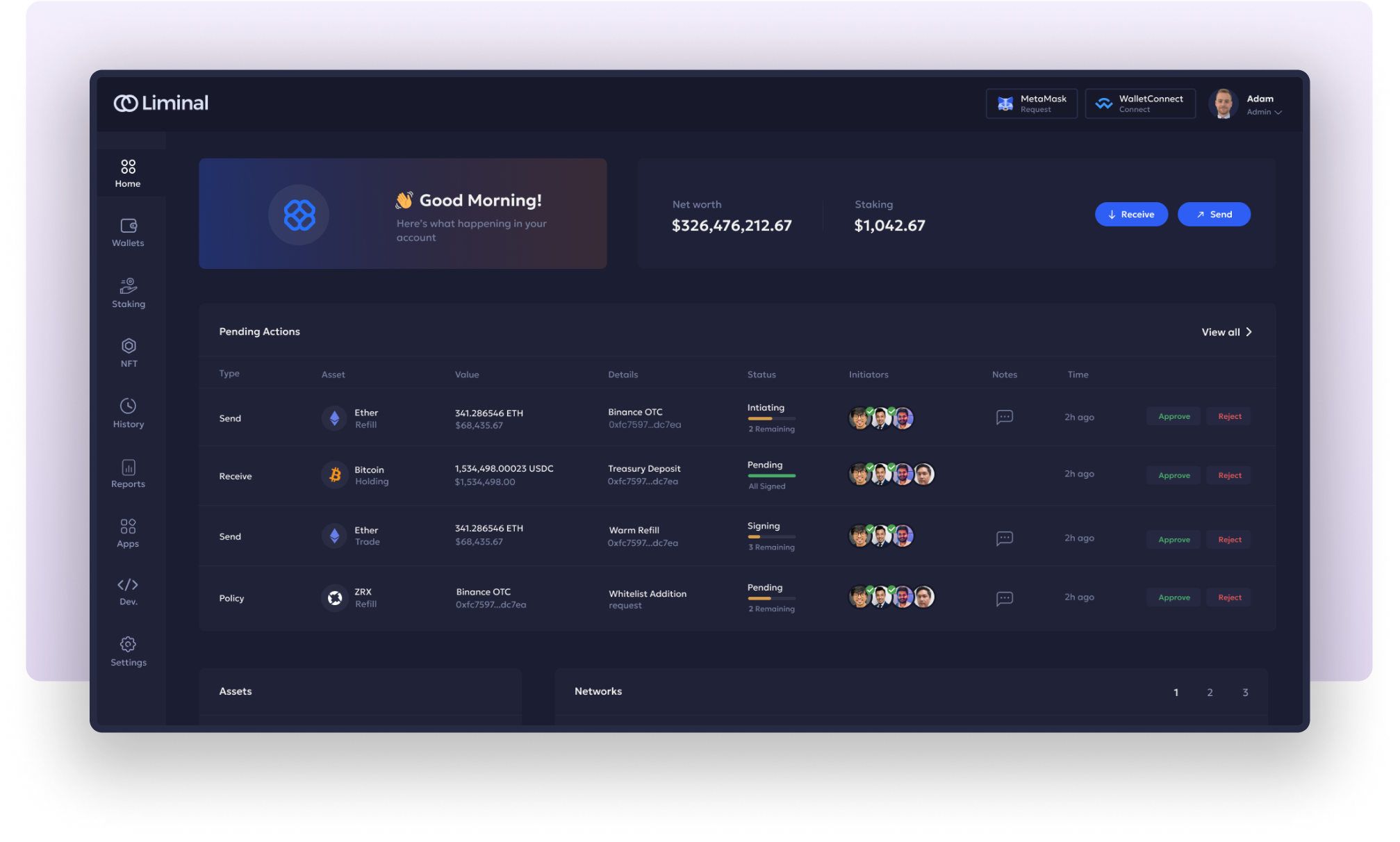
This hybrid approach, exemplified by solutions like MPCAAWallet. com, empowers businesses, DAOs, and institutions to enforce granular access controls without compromising usability. Drawing from recent advancements highlighted by industry leaders such as Safeheron and Cobo, MPC eliminates private key reconstruction risks through distributed threshold signing, while AA introduces smart contract-like flexibility directly into wallet operations.
Why MPC Redefines Security in MPC Hybrid Custody Enterprises
MPC operates by shattering private keys into encrypted shares held by multiple parties; no single entity can access the full key, rendering breaches ineffective even if several shares are compromised. Cobo’s MPC-TSS framework, for instance, supports flexible M-of-N approval structures backed by trusted execution environments (TEEs), ideal for exchanges and Web3 enterprises. Fireblocks similarly provides institutional-grade self-custody, processing billions in transfers with MPC infrastructure that scales for high-volume operations.
Consider Safeheron’s platform, which has safeguarded over $1.5 billion for 170 and institutions since 2021. Their policy engine enables real-time collaboration, off-chain multisignatures for fee efficiency, and privacy-enhanced approvals. This marks a pivot from custodial vulnerabilities to MPC hybrid custody enterprises, where teams collaborate seamlessly without exposing assets to insider threats or external hacks.
Key MPC Benefits for Teams
-
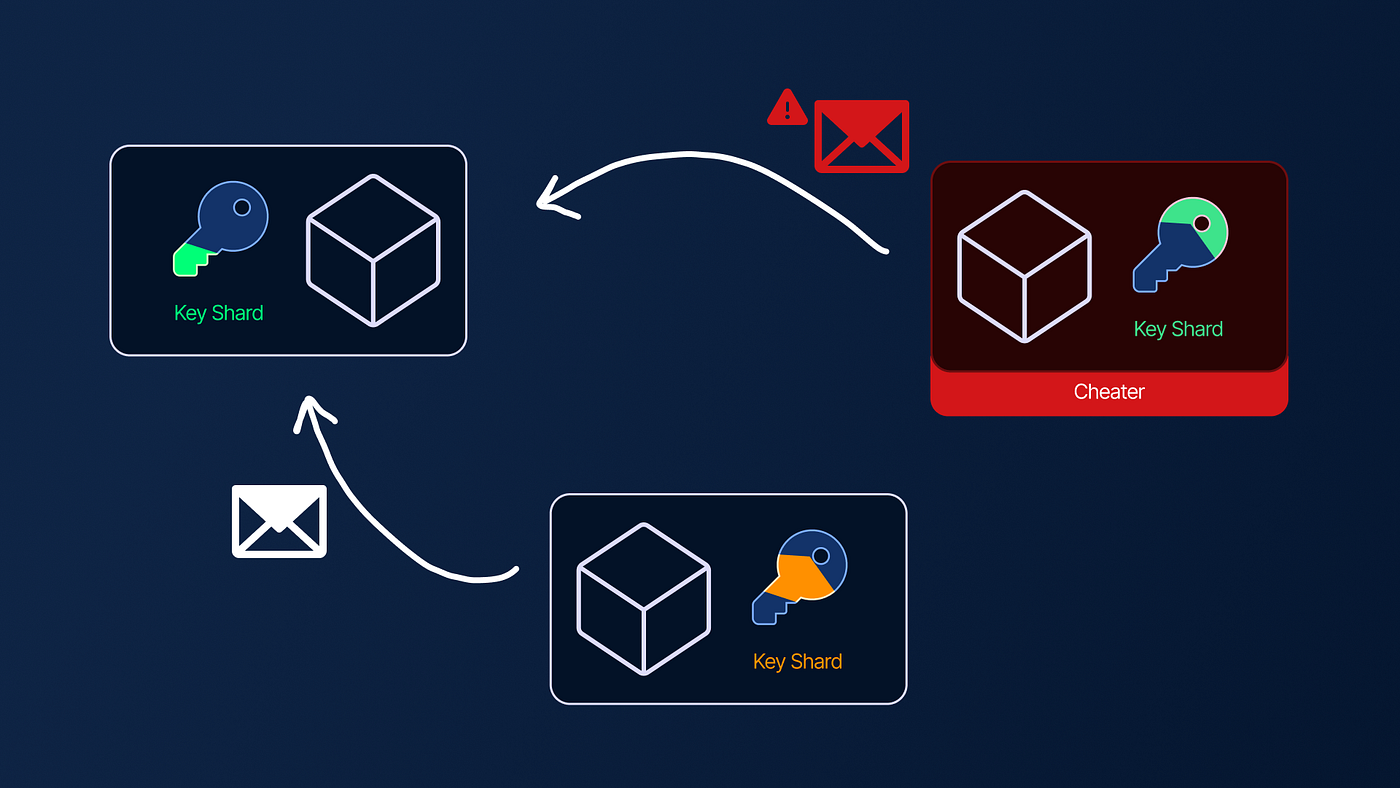
Enhanced Security via Key Sharding: MPC splits private keys into shards distributed across parties, ensuring no single entity holds the full key, as in Cobo’s MPC-TSS.
-
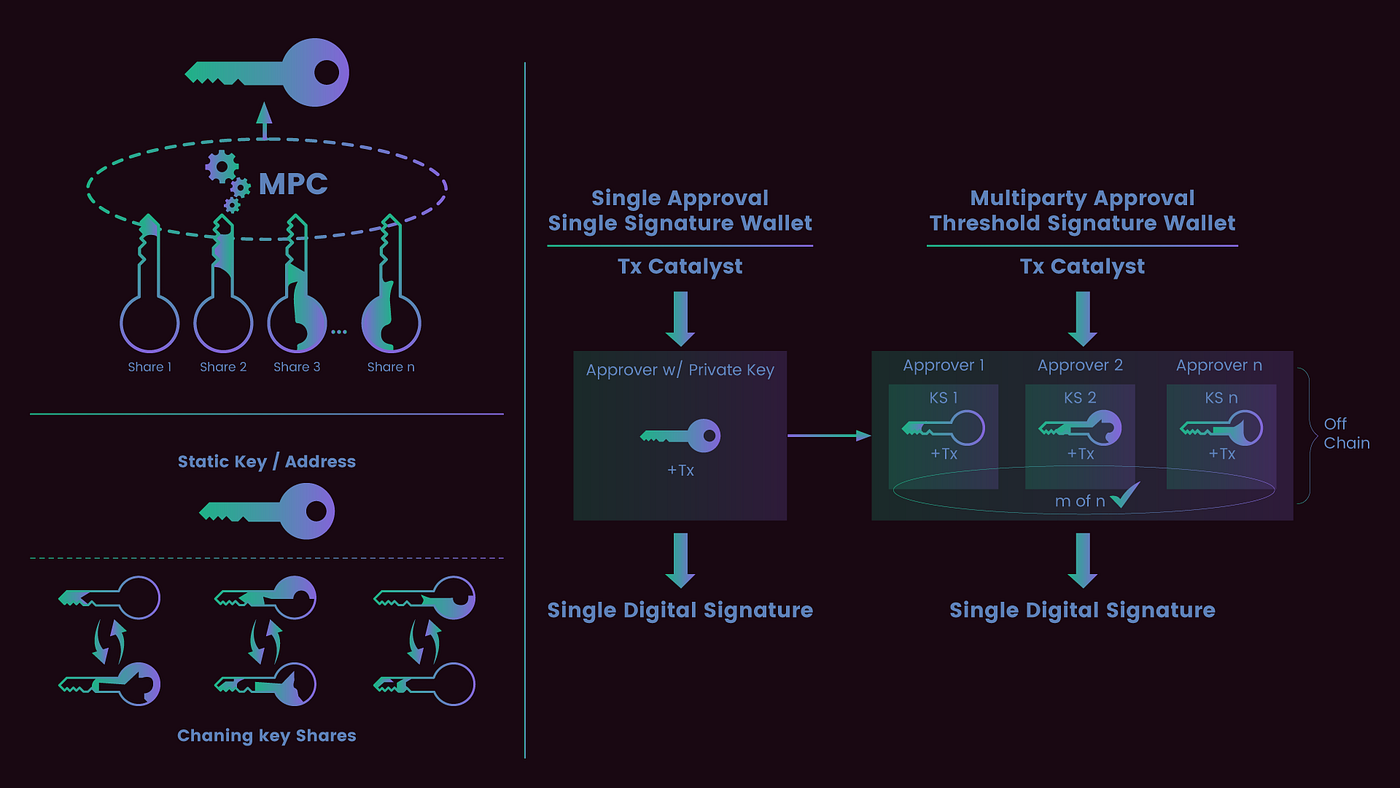
Flexible M-of-N Approvals: Enables threshold signatures requiring M-of-N approvals for transactions, supporting team governance without full key reconstruction.
-

TEE Integration: Combines MPC with Trusted Execution Environments for hardware-secured key shares, featured in Safeheron and Cobo solutions.
-
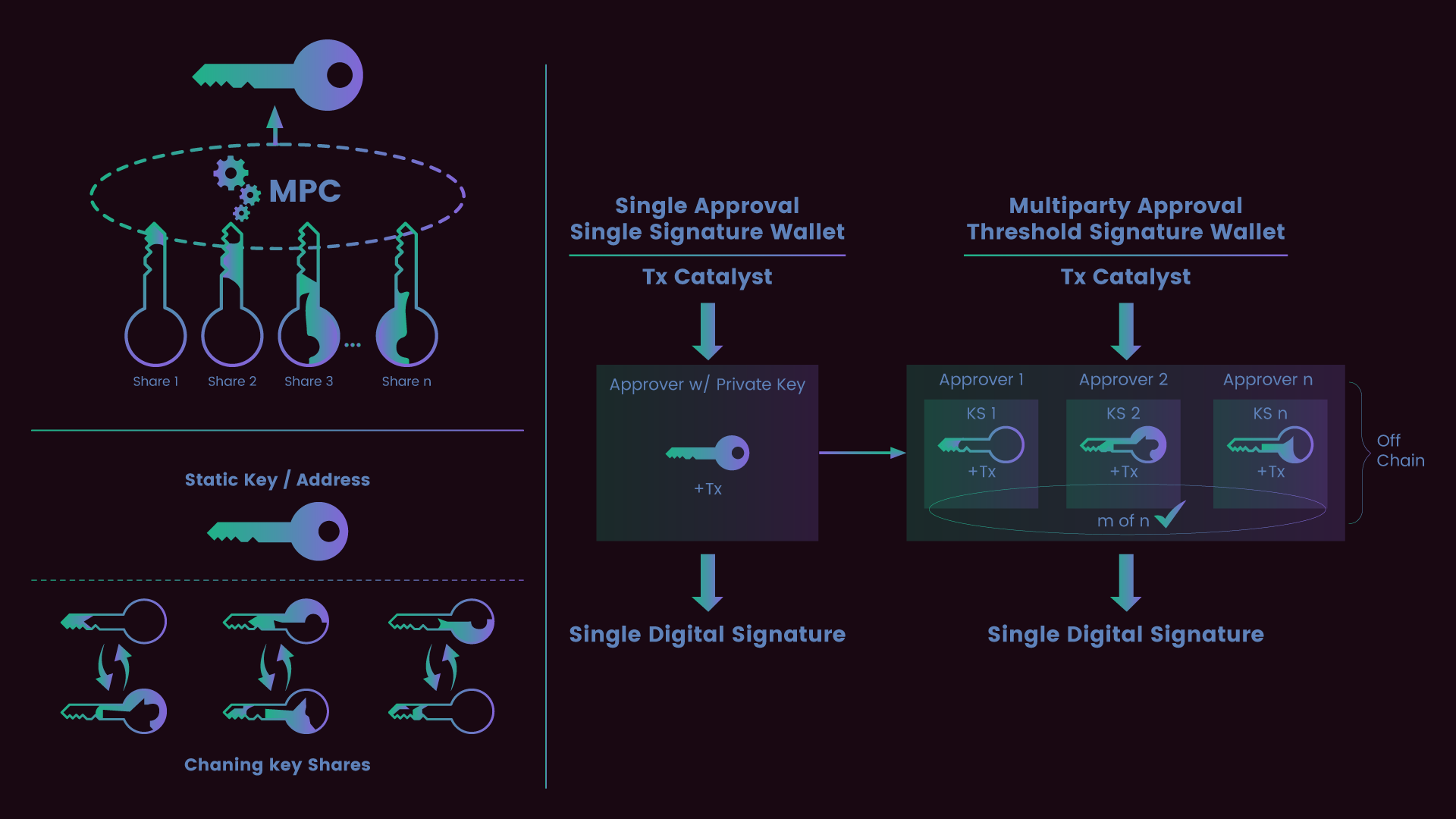
Reduced Single-Point Failures: Eliminates risks from single key compromises by jointly computing signatures without reconstructing keys.
-
Scalable for DAOs & Funds: Supports multi-party management for DAOs, funds, and teams with policy engines and approvals, like Fireblocks infrastructure.
Blockdaemon underscores how MPC mitigates theft risks inherent in single-party breaches, a critical edge in an era of sophisticated attacks. Vaultody extends this to joint custody for businesses and crypto funds, incorporating internal approval workflows that streamline operations.
Account Abstraction Unlocks AA Compliance Policies
Account abstraction elevates wallets beyond basic transaction tools, embedding programmable logic for automated compliance. AA wallets, compliant with ERC-4337 standards, allow custom validation rules, gas abstraction, and batched operations, perfect for AA compliance policies in regulated environments. Enterprises can define policies like spending limits, KYC checks, or geographic restrictions natively within the wallet, reducing reliance on external smart contracts.
Fystack positions MPC wallets as critical infrastructure extending beyond conventional custody, with AA enabling team-specific customizations. CoinsDo’s top MPC wallets of 2026 highlight seamless user control paired with AA’s programmability, fostering adoption among fintechs and PSPs. AnankAI, powered by Fireblocks MPC, integrates DeFi and multi-chain support while aligning with FATF, AMLD5, and MiCA frameworks, ensuring team crypto custody compliance.
Integrating MPC and AA for Robust Team Environments
The true power lies in hybrid MPC AA solutions, where MPC’s cryptographic security meets AA’s operational intelligence. MPCAAWallet. com pioneers this fusion, offering customizable policies for granular access, multi-user workflows, and enterprise-grade protection. Teams benefit from real-time automation, as noted in Safeheron’s enterprise MPC solutions, accelerating asset management without sacrificing control.
ChainUp’s analysis reveals how these wallets surpass traditional models, providing reliable digital asset protection through collaborative signing and policy enforcement. For compliance-heavy organizations, this means audit-ready trails, role-based permissions, and adaptive governance that evolves with regulatory shifts. DEV Community contrasts this against custodial convenience risks and self-custody clunkiness, affirming MPC AA as the balanced path forward for institutional teams.
Organizations deploying MPC AA wallets report up to 90% faster approval cycles and near-zero downtime during high-volume transfers, as evidenced by platforms like Cobo serving exchanges and institutions. This integration not only fortifies team crypto custody compliance but also adapts to evolving threats, such as quantum computing risks, through post-quantum cryptography upgrades in leading MPC frameworks.
Overcoming Common Pitfalls in MPC Hybrid Custody Enterprises
Despite the advantages, teams often stumble on integration hurdles or policy misconfigurations. A frequent oversight involves insufficient M-of-N thresholds, leaving systems vulnerable to collusion. MPCAAWallet. com addresses this with intuitive policy builders that simulate scenarios before deployment, ensuring robust MPC hybrid custody enterprises. Another challenge is cross-chain interoperability; AA’s programmability bridges this gap, enabling seamless asset movements across EVM-compatible and non-EVM networks without custom bridges.
Calibraint’s 2026 outlook emphasizes how MPC crypto wallet security paired with account abstraction transforms custody by automating compliance checks at the wallet level. For DAOs, this means token-gated approvals or treasury policies that enforce contributor vesting schedules natively. Businesses gain from automated tax reporting hooks, aligning with global standards like MiCA without manual interventions.
Comparison of Custody Solutions: Custodial Wallets vs. Self-Custody vs. MPC AA Hybrid
| Aspect | Custodial Wallets | Self-Custody | MPC AA Hybrid Custody |
|---|---|---|---|
| Security | 🔒 Regulated but third-party risk ❌ Single point of failure | ✅ Full user control but user error prone | 🔒 MPC distributes keys + TEEs ✅ No key reconstruction, eliminates failures |
| Compliance Flexibility | ✅ Custodian handles regs but rigid | ❌ Limited tools, hard to audit | ✅ Policy Engine + off-chain multisig + AA ✅ Flexible, MiCA/FATF compliant |
| Team Usability | ✅ Easy setup but risky sharing | ❌ Clunky key mgmt for teams | ✅ Multi-party collab + approvals ✅ Real-time, enterprise-grade |
| Scalability | ✅ Provider scales infrastructure | ❌ Manual, doesn’t scale for orgs | ✅ M-of-N thresholds + automation ✅ Handles $B+ assets |
| Cost Efficiency | 💰 High custody fees | ✅ Low fees but high ops overhead | ✅ Self-custody + reduced tx fees ✅ Efficient for volume |
Practical deployment reveals MPC AA’s edge in audit efficiency. Every transaction generates immutable logs with key-share proofs, simplifying regulatory reviews. Vaultody’s workflows for crypto funds demonstrate internal approvals that mimic enterprise ERP systems, yet operate on-chain with gas optimizations from AA.
Crafting AA Compliance Policies for Diverse Teams
Policy design in AA-enabled MPC wallets demands a nuanced approach. Start with role segmentation: executives for high-value approvals, analysts for routine trades, and auditors for oversight. MPCAAWallet. com’s engine supports time-locks, whitelists, and multi-sig variants, all programmable via no-code interfaces. This democratizes security, allowing non-technical teams to enforce AA compliance policies without developer dependency.
Safeheron’s off-chain multisig reduces fees by 70% compared to on-chain equivalents, a boon for high-frequency trading desks. AnankAI extends this to DeFi yield farming under strict compliance, proving MPC AA’s versatility across passive and active strategies. Fystack notes that such infrastructure future-proofs teams against custodial outages, like those plaguing centralized platforms in past bull runs.
From my vantage with 12 years blending hybrid finance, the shift feels inevitable. Traditional models creak under regulatory scrutiny; MPC AA injects resilience and intelligence, turning wallets into strategic assets.
Teams embracing this hybrid model unlock collaborative efficiencies previously unimaginable. Imagine a global DAO treasury approving multimillion-dollar proposals via mobile approvals, all vetted against predefined risk profiles. Or a fintech scaling fiat-crypto ramps with automated AML screening embedded in wallet logic.
Blockdaemon’s MPC eliminates misuse risks even in partial breaches, while ChainUp elevates protection beyond legacy custody. CoinsDo’s 2026 rankings spotlight wallets blending MPC with AA for user-centric control, signaling mainstream traction. As threats evolve, so do these solutions, incorporating AI-driven anomaly detection and biometric key-shares.
Forward-thinking organizations prioritize MPC AA not as a cost center, but as a competitive moat. MPCAAWallet. com stands at this intersection, fusing MPC’s fortress-like security with AA’s adaptive policies. The result? Empowered teams navigating crypto’s volatility with precision, compliance as a feature, and growth unhindered by legacy constraints.