
Enhancing DAO Security with MPC Custody and Account Abstraction Policies

In 2026, Decentralized Autonomous Organizations (DAOs) manage billions in digital assets, yet security breaches continue to erode trust. Traditional multisig setups falter under sophisticated attacks, exposing funds to single points of failure. Enter MPC custody and account abstraction policies, a potent duo transforming DAO MPC custody security. Platforms like Fireblocks and Fordefi lead with MPC technology that shards private keys across systems, while ERC-4337-enabled account abstraction adds programmable logic for granular controls. This hybrid approach, as highlighted in recent reports from Cobo and Fystack, positions MPC-AA wallets as the gold standard for secure DAO fund management.


Decoding MPC Custody for Resilient DAO Treasuries
Multi-Party Computation (MPC) redefines wallet security by eliminating the need for a complete private key in one place. Instead, cryptographic shares distribute across independent nodes or devices, requiring collaboration only for signing transactions. For DAOs, this means no single member or server holds the keys to the kingdom, drastically reducing insider threats and external hacks.
Consider Fireblocks’ MPC-CMP protocol, an open-source algorithm peer-reviewed for robustness. It creates a zero counterparty risk environment, ideal for DAOs juggling diverse token holdings. Fordefi takes it further with server shares in secure enclaves, enforcing policies pre-signature to block unauthorized moves. Sources like Calibraint’s 2026 outlook note MPC’s shift from niche to default for enterprises, and DAOs fit perfectly: operational efficiency meets unbreakable security.
Why does this matter analytically? DAOs often face governance delays in multisig approvals, inviting exploits during market volatility. MPC accelerates approvals via threshold schemes, say 3-of-5 signers, while maintaining hybrid custody DAOs thrive on. Cobo’s custody guide underscores MPC’s edge over hardware wallets for institutional scale, blending self-custody with policy enforcement.
MPC Custody Benefits for DAOs
-
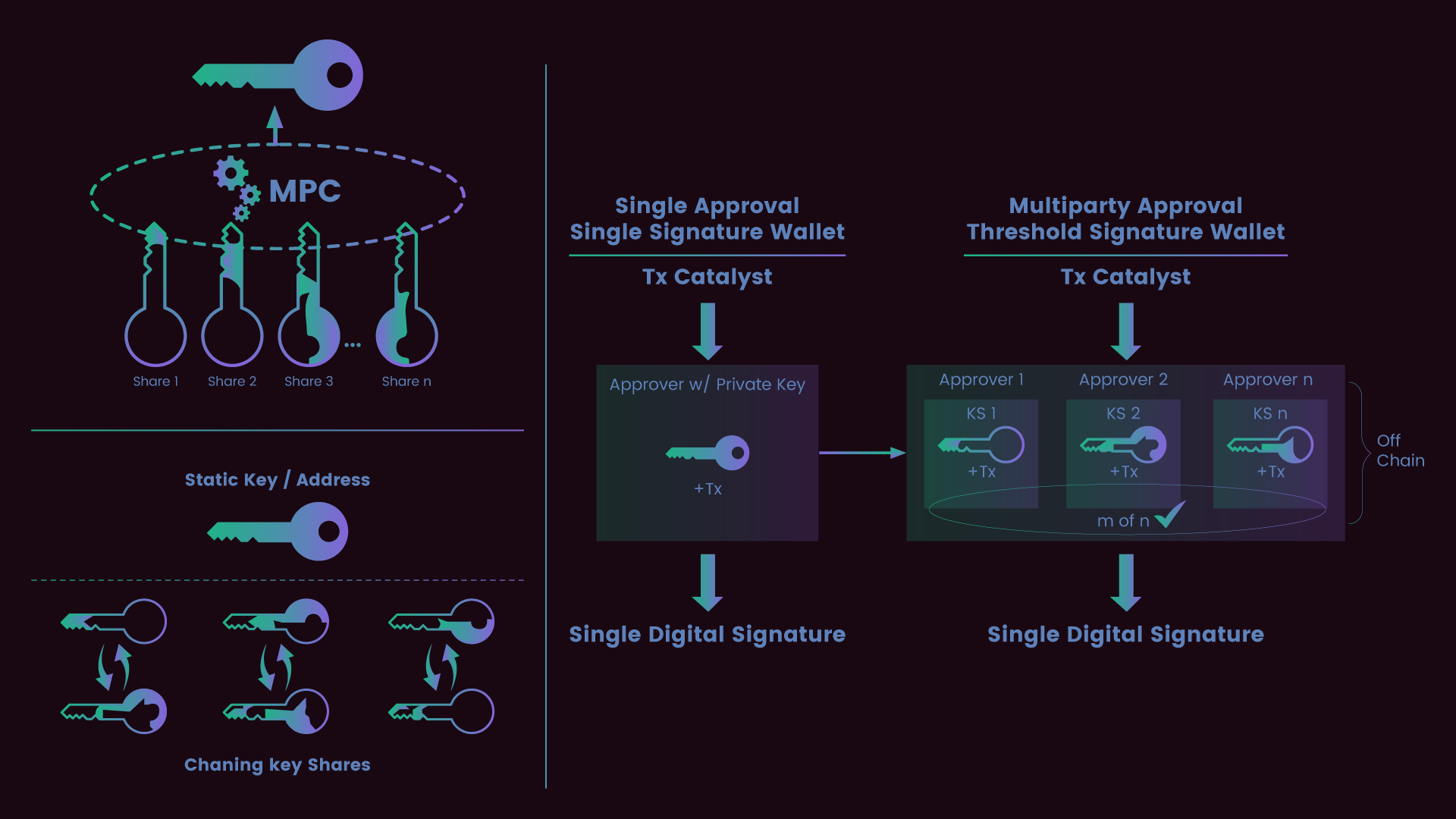
Enhanced Key Security: MPC divides private keys into encrypted shares across independent systems, preventing full key reconstruction in one location, as used by Fireblocks MPC-CMP.
-

Policy Enforcement: Platforms like Fordefi isolate shares in secure enclaves and enforce custom policies before every signature.
-

Multi-Sig Speed: MPC enables faster threshold signatures without traditional multi-sig delays, improving transaction efficiency for DAOs.
-
Reduced Single Failure Points: Eliminates single points of failure and counterparty risk by distributing key shares, per Fireblocks’ zero-trust model.
-
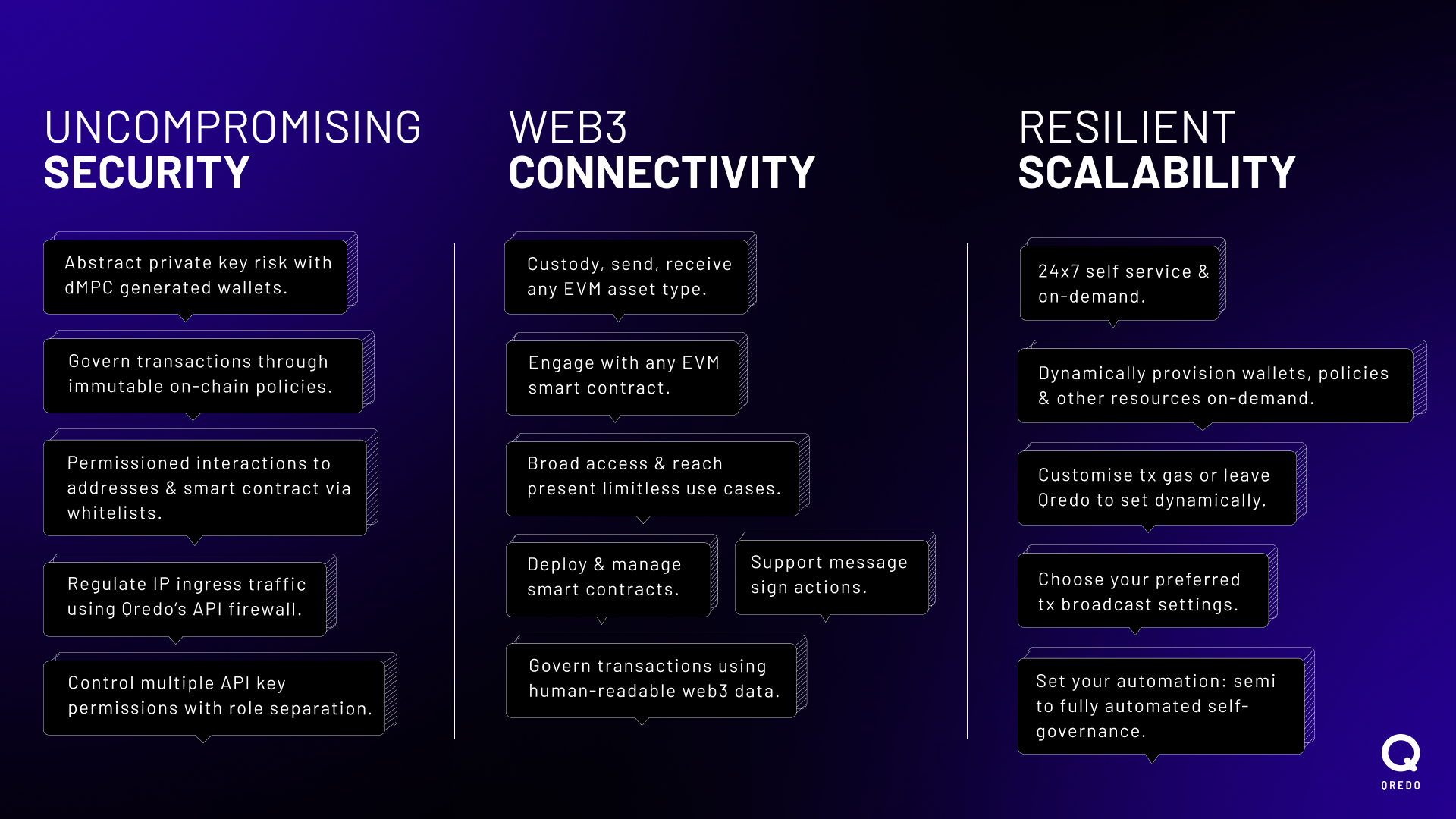
Enterprise Scalability: Supports governance, automated reconciliation, and compliant operations, becoming the default for enterprises by 2026.
Account Abstraction Unleashes Policy-Driven DAO Operations
Account Abstraction (AA), powered by Ethereum’s ERC-4337, flips the script on Externally Owned Accounts (EOAs). Smart contract wallets become default, decoupling authentication from keys and enabling custom verification. For DAOs, this means account abstraction DAO policies like spending caps, role-based access, or even gas sponsorships without burdening voters.
Safe smart accounts exemplify this: modules assign roles with allowances per beneficiary, dodging full multisig for routine payouts. Zodiac’s Roles Modifier adds precision, restricting calls to specific contracts with parameter bounds and rate limits. Imagine a DAO treasury auto-approving grants under $10,000 while flagging larger ones, all coded immutably.
Educationally, AA addresses UX pain points plaguing DAOs. No more seed phrase juggling or gas wars; bundlers handle batches efficiently. Quecko’s Web3 threats report warns of smart contract vulnerabilities, but AA-embedded policies act as proactive shields. Paired with MPC, MPC AA DAO wallets offer programmable security without custody trade-offs, as Fystack details in startup overviews.
Synergizing MPC and AA for Next-Level DAO Governance
The real innovation lies in fusing MPC custody with account abstraction, birthing hybrid solutions tailored for teams. MPC handles the cryptographic heavy lifting, sharding keys securely, while AA layers intelligent policies atop. This creates MPCAAWallet. com-style platforms: customizable for businesses, DAOs, and orgs, enforcing compliance via granular controls.
Analytically, this combo mitigates human error, a top DAO vulnerability per CoinsDo’s top MPC wallets list. Policies trigger only on verified conditions, like multi-approvals or time locks, streamlining multi-user ops. MEXC’s custody roundup praises such hybrids for addressing security angles holistically, from MPC’s math proofs to AA’s flexibility.
Bleap’s wallet explainer contrasts custodial risks with advanced MPC-smart contract hybrids, positioning them for 2026 dominance. DAOs adopting early gain edges in secure DAO fund management: faster treasury ops, auditable trails, and investor confidence amid rising assets under management.