What makes an MPC AA wallet different
An MPC AA wallet merges two distinct cryptographic and protocol-level advancements: Multi-Party Computation (MPC) and Account Abstraction (AA). This convergence addresses the persistent security-usability trade-off that has defined non-custodial crypto custody for years. Previous generations of wallets forced users to choose between the fragility of single-key management and the friction of traditional multi-signature setups. This hybrid approach eliminates that compromise by distributing cryptographic trust while restoring programmable user experience.
At the core of this architecture is MPC, a cryptographic protocol that splits a private key into multiple shards distributed across different devices or servers. No single entity ever holds the complete private key. Instead, these shards collaborate to sign transactions without ever revealing the underlying secret. This structure significantly raises the barrier for attackers; compromising one shard or device does not grant access to the funds. As noted by Portal, this technology forms the foundation of a more resilient Web3 user experience by removing the single point of failure inherent in traditional key management.
Account Abstraction (ERC-4337) operates at the protocol layer, decoupling the validation logic of a transaction from the underlying blockchain execution. This allows for features previously reserved for centralized exchanges, such as social recovery, batched transactions, and sponsored gas fees. When combined with MPC, the resulting MPC AA wallet offers enterprise-grade security with consumer-grade usability. The user interacts with a smart contract account that leverages MPC for signing, meaning they can recover access through trusted contacts or biometric verification rather than memorizing a 12-word seed phrase.
The practical result is a wallet that behaves like a bank account in terms of recovery and flexibility, but retains the self-custodial nature of blockchain. Developers building on this stack, such as those at Turnkey, emphasize that this combination is not merely an incremental improvement but a fundamental shift in how digital assets are accessed and secured. It allows institutions and individuals to manage high-value assets with a level of operational resilience that was previously unattainable in the non-custodial space.
How MPC technology secures private keys
The security of an MPC AA wallet relies on the mathematical properties of secret sharing. Unlike traditional wallets where the entire private key resides in one location, MPC splits the key into $n$ shards, requiring only $t$ shards (where $t < n$) to reconstruct a signature. This threshold scheme ensures that even if an attacker compromises $t-1$ shards, the private key remains mathematically inaccessible.
For enterprise teams, the distribution of these shards is critical. Shards are typically stored in Hardware Security Modules (HSMs) for institutional custody or on user devices for non-custodial applications. The interaction between shards is secured via encrypted channels, ensuring that shard data is never exposed in plaintext during the signing process. This architecture aligns with the security standards required by institutions like Fireblocks, which integrates MPC with HSMs to meet compliance frameworks such as SOC 2 Type II and FedRAMP.
Account abstraction improves user experience
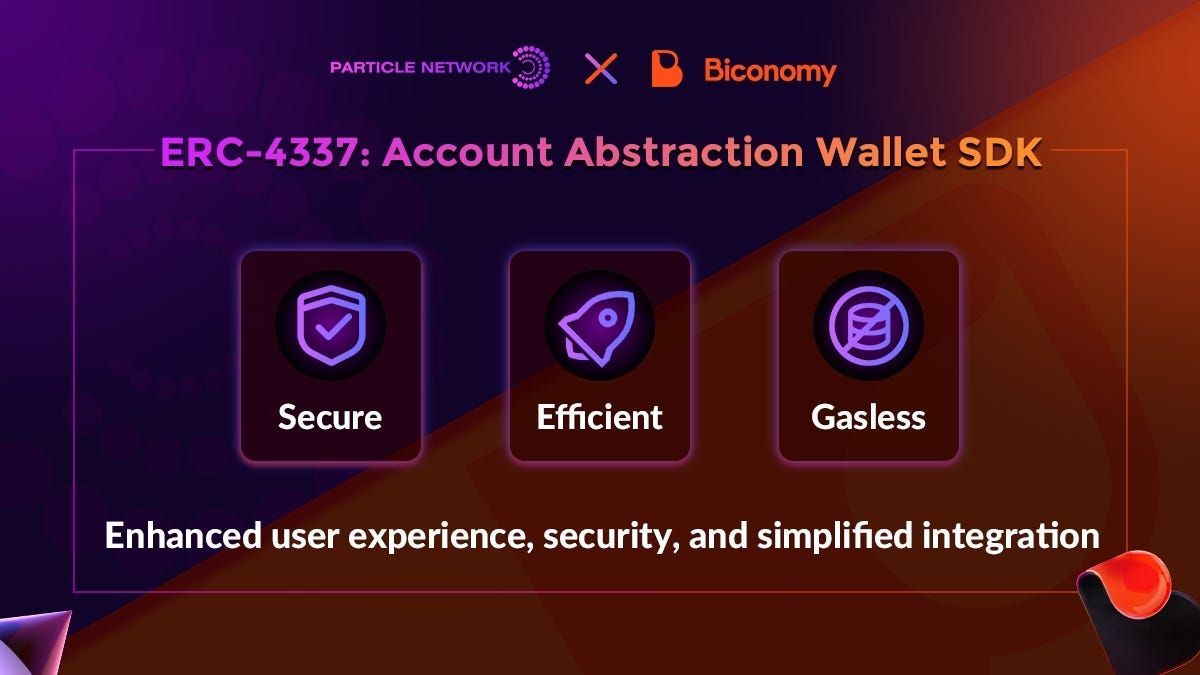
Account Abstraction (ERC-4337) transforms the user experience by decoupling transaction validation from the blockchain's native execution layer. In an MPC AA wallet, this means users can interact with smart contract accounts that enforce custom logic for signing and recovery.
Key benefits include:
- Social Recovery: Users can designate guardians who can help restore access if a device is lost, eliminating the need for seed phrase memorization.
- Batched Transactions: Multiple operations can be signed in a single transaction, reducing gas costs and improving efficiency.
- Sponsored Gas: Developers or enterprises can pay gas fees on behalf of users, lowering the barrier to entry for new users.
When combined with MPC, these features create a seamless experience where security is maintained through distributed key management, while usability is enhanced through programmable smart contract logic. Portal, for instance, leverages this combination to offer social recovery via guardians, making it a strong choice for teams building decentralized applications within the Ethereum ecosystem.
Leading MPC AA wallet providers for teams
Enterprise teams selecting an MPC AA wallet infrastructure must evaluate how each provider balances key sharding, recovery mechanisms, and chain support. The following comparison highlights three established providers: Fireblocks, Portal, and Turnkey. Each offers distinct technical approaches to securing digital assets through multi-party computation and account abstraction.
| Provider | Key Sharding | Recovery Method | Supported Chains | Compliance |
|---|---|---|---|---|
| Fireblocks | Multi-party computation (MPC) with HSM integration | Threshold signature with trusted recovery agents | 100+ blockchains | SOC 2 Type II, ISO 27001, FedRAMP |
| Portal | MPC combined with Account Abstraction | Social recovery via guardians | EVM-compatible chains | SOC 2 Type II |
| Turnkey | MPC with Trusted Execution Environments (TEEs) | Multi-sig with threshold signatures | EVM-compatible chains | SOC 2 Type II, ISO 27001 |
Fireblocks utilizes a multi-party computation model integrated with hardware security modules (HSMs) to split private keys across multiple parties, ensuring no single point of compromise. This approach is particularly suited for high-volume trading desks and custodians requiring robust compliance frameworks, including SOC 2 Type II and FedRAMP. Fireblocks supports over 100 blockchains, offering broad asset coverage for diverse portfolios.
Portal combines MPC with Account Abstraction to enhance the user experience while maintaining security. Its recovery mechanism relies on social recovery via guardians, allowing users to regain access through trusted contacts rather than complex seed phrases. Portal focuses primarily on EVM-compatible chains, making it a strong choice for teams building decentralized applications or managing assets within the Ethereum ecosystem.
Turnkey employs MPC alongside Trusted Execution Environments (TEEs) to protect key material. Its recovery method uses multi-signature wallets with threshold signatures, providing flexibility for different security policies. Turnkey also targets EVM-compatible chains and holds SOC 2 Type II and ISO 27001 certifications, appealing to enterprises with strict security and compliance requirements.
Hardware wallets for MPC key storage
MPC AA wallet architectures rely on splitting private key shards across multiple devices or servers. While cloud-based shards offer convenience, storing the user’s shard on a hardware wallet provides a critical offline defense layer. This approach ensures that even if a device is compromised, the attacker cannot reconstruct the full key without the physical token.
When selecting hardware for this role, compatibility with MPC protocols is the primary constraint. Not all devices support the specific signing algorithms or secure element interactions required by modern MPC AA wallet providers. Leading solutions like Fireblocks and Turnkey integrate with major hardware vendors to ensure secure key generation and signing events.


As an Amazon Associate, we may earn from qualifying purchases.
The Ledger Nano X and Trezor Model T remain the most reliable options for institutional-grade MPC setups. Their secure elements are regularly audited, and their SDKs are well-documented for integration with MPC AA wallet backends. For users prioritizing air-gapped security, the SafePal S1 offers a compelling alternative without requiring Bluetooth or USB connections.
Checklist for choosing an MPC AA solution
Selecting a provider for your MPC AA wallet requires rigorous due diligence. The architecture must balance institutional-grade security with the flexibility developers need for seamless integration.
Demand SOC 2 Type II certification and proof of independent cryptographic audits. Fireblocks and Turnkey both publish their security frameworks, ensuring your MPC AA wallet meets institutional standards for key fragmentation and threat mitigation.
Confirm how the provider manages key shards. Look for solutions that combine Multi-Party Computation with Trusted Execution Environments (TEEs). This dual-layer approach, detailed in Turnkey’s technical breakdowns, prevents any single entity from reconstructing the private key.
Account Abstraction adds complexity to transaction signing. Review the provider’s SDKs and API latency. Portal’s documentation highlights how MPC AA simplifies the developer experience while maintaining the security benefits of distributed key generation.
This structured evaluation ensures your MPC AA wallet remains secure without sacrificing operational efficiency.
No comments yet. Be the first to share your thoughts!