
MPC AA Hybrid Custody for DAOs: Granular Policy Controls in Team Wallets

Decentralized Autonomous Organizations, or DAOs, have transformed how teams collaborate on digital assets, but their growth exposes vulnerabilities in traditional wallet management. As membership swells and treasuries balloon, the need for MPC AA hybrid custody becomes undeniable. This fusion of Multi-Party Computation and Account Abstraction delivers unbreakable security alongside programmable flexibility, letting DAOs enforce granular policy controls in team wallets without centralizing power.

Recent shifts in the crypto landscape underscore this urgency. Platforms like Tholos exemplify how MPC-based wallets with customizable policy engines enable transaction approvals and role-based access, minimizing risks from insider threats or hacks. Institutions echo this trend; sources from Cobo and Blockdaemon highlight MPC’s edge in eliminating single points of failure, a staple for secure multi-user wallets.
Why MPC Redefines Security for DAO Team Wallets
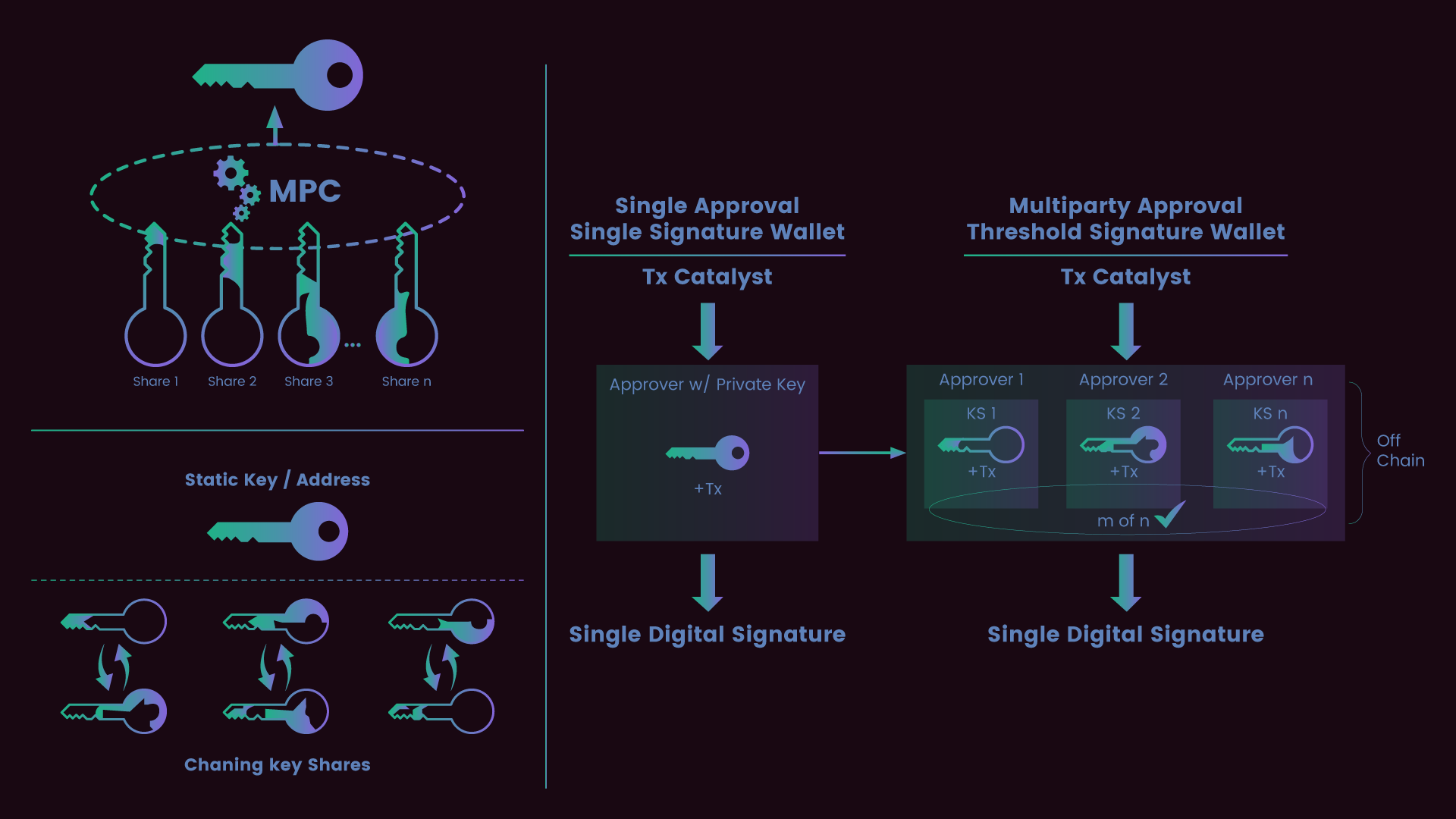
At its core, Multi-Party Computation splits private keys into encrypted shares held by multiple parties. No single entity controls the full key, thwarting breaches that plague seed-based or multisig setups. Gate. com’s analysis pits MPC against multisig: while multisig relies on on-chain signatures prone to front-running, MPC computes signatures off-chain collaboratively, slashing gas fees and exposure.
IdeaSoft’s tech deep-dive reinforces this; MPC paired with AA builds programmable foundations that scale for enterprises. For DAOs, this means treasurers can approve spends up to set limits, while developers trigger smart contract deploys only after quorum. Fystack calls MPC wallets critical infrastructure, extending beyond models to empower teams with enterprise-grade custody.
Account Abstraction Unlocks Programmable Policies in Crypto
Account Abstraction, via ERC-4337, moves wallet logic on-chain. Smart contracts validate transactions, call others, and enforce rules natively, as andrewnalichaev. com explains. Standalone, AA shines for user-friendliness; bundle it with MPC, and DAOs gain account abstraction DAOs supercharged for compliance.
Imagine a DAO treasury wallet where policies dictate: spending caps per role, time-locks on proposals, or geo-fencing for contributors. ChainUp forecasts this for 2026 enterprise custody, blending multi-sig governance with MPC resilience. Safeheron’s basics confirm: MPC infrastructure distributes shares cryptographically, perfect for DAO team wallets.
MPC vs Multisig vs AA: Security, Flexibility, DAO Use Cases
| Aspect | MPC | Multisig | AA |
|---|---|---|---|
| Security (No Single Point of Failure) | ✅ | ✅ | ✅ |
| Flexibility & Programmability | ✅ | 🚫 | ✅ |
| Granular Policy Controls for DAOs | ✅ | 🚫 | ✅ |
| Transaction Efficiency & Speed | ✅ | 🚫 | ✅ |
Such granularity curbs excesses seen in past DAO exploits, where unchecked multisigs led to millions lost. CoinsDo ranks top MPC wallets for 2026 on user control and security, but hybrid MPC-AA elevates them for organizations.
Granular Controls: Crafting Policies That Scale with DAOs
Hybrid custody shines in policy engines. Define roles – voters, signers, viewers – each with tailored permissions. Tholos-like systems let DAOs script workflows: a proposal needs 60% voter approval before MPC shards reconstruct for execution. Medium’s seedless self-custody piece aligns; smart contract wallets via MPC ditch mnemonic risks entirely.
This setup fosters trustless collaboration. A marketing lead requests ad spends under $10K solo; larger ones route through finance quorum. Policies adapt as DAOs evolve, from 10 to 10,000 members, without refactoring infrastructure.
We’ve also been putting a massive effort into Quorum Messenger, the ultimate tool for private communication on the web. In the following weeks, we will start our rollout of beta access to Quorum Mobile, for both Android and iOS. And there’s some surprises in store, even if you’re already a user of Quorum on the web.
Quorum Mobile isn’t just a secure group chat application. It’s also one of the first social multi-party wallets – whether your group chat uses Ethereum, Solana, or Quilibrium, Q’s MPC key management technology allows your friend groups, DAOs, chaotic network spiritualist enclaves to pool your resources together, all on Quorum, without sacrificing the existing wallet experience.
Speaking of communities, spaces on Quorum will be enhanced with Quorum Apex, our Discord Nitro equivalent. With an Apex subscription, you will be able to sponsor Spaces on Quorum, where Space owners will receive shared proceeds of the Apex subscriptions. Apex subscriptions can be purchased in $USDC, $wQUIL, and $QUIL, with a cheaper overall price if you use $wQUIL or $QUIL.
And for Farcaster users, there’s One More Thing – Mini App support is built in. Whether you want to put your group wallet to work on a team @bracky, @ampsfun your posts, or maybe spread the love with some @noiceapp, you’ll be able to do it as a team, like you already have on your Farcaster/Base wallets.
September is going to be one of the craziest months at Quilibrium, and we look forward to how you all enjoy the fruits of our labor.
In the meantime, if you would like to be invited to the Quorum Mobile beta, please reach out!
These policies don’t just prevent mishaps; they instill confidence, allowing DAOs to focus on innovation rather than firefighting. Drawing from my 15 years in portfolio management, I’ve witnessed how rigid structures stifle growth, but granular policy controls crypto strike the right balance, scaling seamlessly with enterprise demands.
Real-World Impact: DAOs Thriving with MPC-AA Hybrid Custody
Consider a mid-sized DAO managing a $50 million treasury across chains. Without hybrid custody, multisig delays bog down operations, exposing keys to phishing. MPC-AA flips this: shards distribute securely, AA handles bundling for gas efficiency, and policies automate 80% of approvals. Tholos demonstrates this, offering customizable engines that enforce workflows tailored to DAO charters.
Blockdaemon’s custody insights align perfectly; MPC mitigates theft risks even if parties compromise. For DAOs, this means contributors in different jurisdictions sign off without key exposure. Cobo positions MPC as institutional standard, eliminating failures that doom solo custodians. ChainUp’s 2026 outlook predicts dominance in governance, where MPC outpaces multisig in resilience.
Yet, the true power emerges in adaptability. A DAO pivoting to DeFi yields? Policies auto-adjust thresholds based on volatility, viewer roles get read-only dashboards, signers face time-bound shards. Fystack deems these wallets critical infrastructure, empowering teams beyond legacy models. In practice, this cuts operational overhead by half, per IdeaSoft’s analysis on programmable foundations.
Overcoming Challenges: From Multisig Pitfalls to Policy Precision
Multisig wallets falter under DAO scale; on-chain sigs invite MEV attacks, as Gate. com details. MPC sidesteps this with off-chain computation, AA adds validation layers. CoinsDo’s top 2026 picks emphasize user control, but hybrids excel in multi-user scenarios. Seedless self-custody, per Medium, eradicates mnemonic vulnerabilities, aligning with AA’s smart contract ethos.
Challenges persist: onboarding complexity, cross-chain sync. Hybrid solutions address them via intuitive dashboards and ERC-4337 bundlers. Safeheron’s infrastructure basics show share distribution enables fault tolerance; lose one node, operations continue. For DAOs, this means uninterrupted governance during volatility spikes.
I’ve advised teams where policy misconfigs led to locked funds. MPC-AA’s audit trails and simulation modes prevent repeats, ensuring secure multi-user wallets evolve predictably. Andrewnalichaev. com’s learnings confirm: AA’s on-chain logic pairs ideally with MPC’s secrecy, birthing wallets that think like organizations.
As DAOs mature into hybrid entities – blending on-chain votes with off-chain execution – MPC AA hybrid custody anchors them. Granular controls foster accountability without bureaucracy, turning treasuries into engines of progress. Platforms advancing this space, like those fusing MPC with AA, position DAOs not just to survive, but to lead crypto’s next era with precision and poise.