

DAO treasuries pulse with potential, yet vulnerability lurks in every unvetted transfer. Granular access controls MPC fused with account abstraction policies redefine security for DAO team wallets. This MPC AA hybrid custody model distributes key shares across participants while embedding programmable logic, ensuring no single actor wields unchecked power. Teams enforce thresholds, multi-sig workflows, and compliance checks natively, transforming chaos into calibrated control.
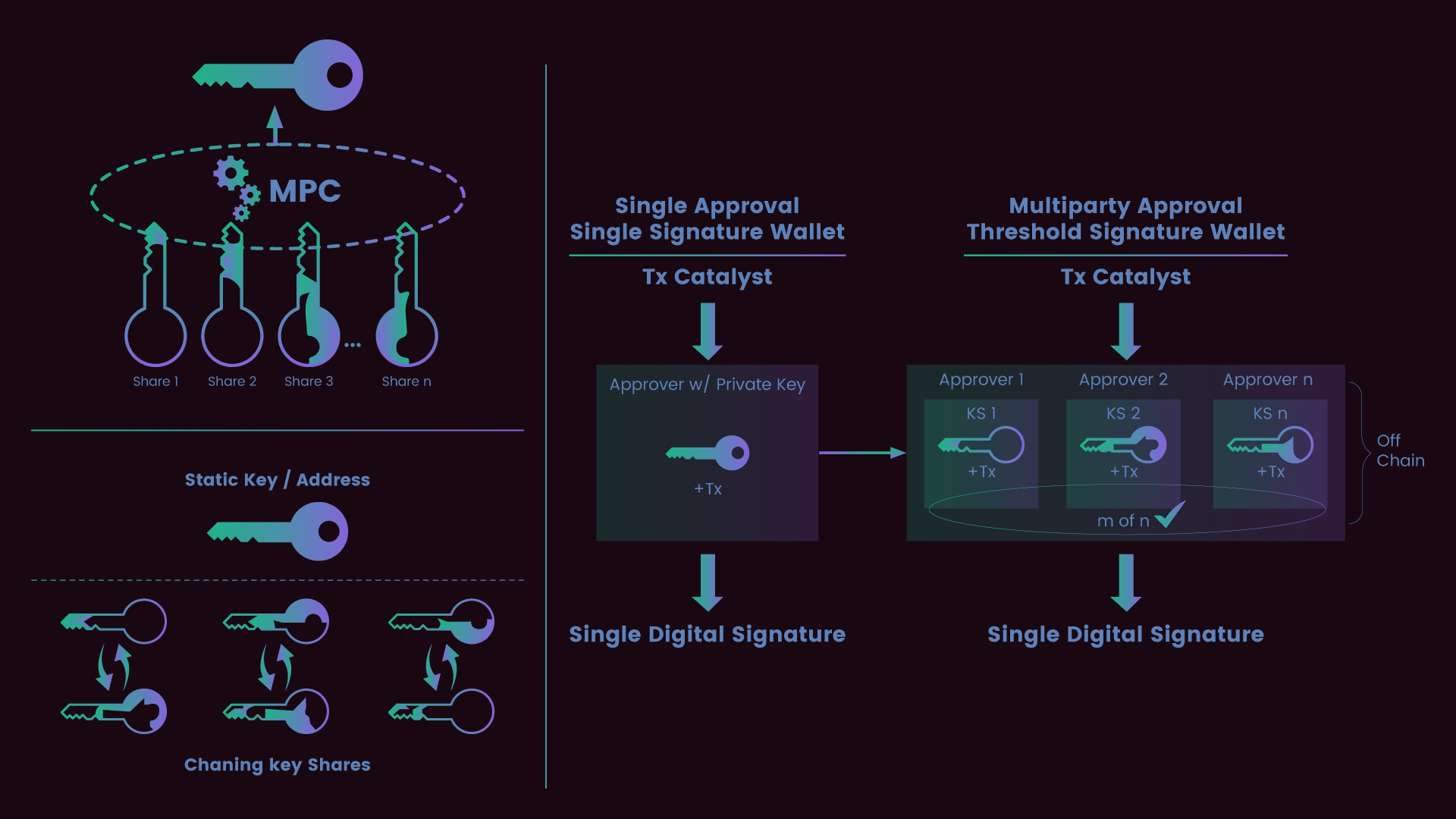
MPC technology shards private keys mathematically, demanding collaboration for signatures. No honeypot for hackers; control fragments evaporate single points of failure. Yet sources like ChainScore Labs expose a critical gap: pure MPC excels at distribution but stumbles on policy enforcement. Without smart accounts, approvals devolve to clunky off-chain coordination, roles blur, and recovery mechanisms falter.
Pure MPC's Policy Blind Spot in Enterprise Custody
Consider institutional demands. Fireblocks and Blockdaemon tout MPC's low-latency signatures and multi-chain support, but granular permissions remain rudimentary. MPC custody supports real-time access and automated workflows, per io. finnet, yet lacks the business logic layer for nuanced rules. DAOs, with fluid memberships and decentralized governance, amplify this flaw. A whale transfer slips through sans tiered approvals; a compromised shard triggers manual panic.
Safeheron highlights MPC's policy-based approvals and real-time monitoring, yet concedes integration hurdles. Nichanan Kesonpat's analysis on seedless self-custody nails it: institutional users crave unlimited approvers per policy, delegated permissions, and role hierarchies. Pure MPC? It distributes risk but not decision-making intelligence.
MPC vs. MPC+AA: Comparison of Granular Access Control Features for DAO Treasuries
| Feature | MPC | MPC+AA |
|---|---|---|
| Key Share Distribution (No Single Control) | ✅ | ✅ |
| Transaction Limits & Policies | ⚠️ (Basic) | ✅ (Advanced, Customizable) |
| Multi-Party Approvals | ⚠️ (Limited Signers) | ✅ (Unlimited Approvers, Workflows) |
| Role-Based Permissions & Delegation | ❌ | ✅ (Granular Roles) |
| Recovery Mechanisms | ⚠️ | ✅ (Smart Account Logic) |
| Programmable Business Logic | ❌ | ✅ (Account Abstraction) |
| Time Locks for Transfers | ✅ | ✅ |
| Real-Time Compliance Monitoring | ✅ | ✅ (Enhanced) |
Account Abstraction Unlocks Programmable Precision
Enter account abstraction (AA): Ethereum's ERC-4337 upgrade renders wallets smart contracts. Secure multi-user crypto wallets gain native programmability. Fystack details how MPC integrates with next-gen smart accounts, birthing hybrid custody that eliminates single failure points, as IdeaSoft elaborates. AA injects the missing layer: custom validation functions execute on-chain, verifying spender limits, time delays, or even oracle-fed compliance.
DAO teams configure policies surgically. Transfers under $50,000? Solo signers suffice. Above? Sequential approvals from treasury leads, then quorum vote. Time locks pause outflows post-vote, curbing rug-pull impulses. Ripple underscores AA's edge: full user control via smart contracts, sans seed phrase roulette.
Core Granular Controls
- Transaction Limits with Auto-Approvals: Policies set thresholds for automatic approval of low-value transfers, reducing manual oversight while enforcing security in MPC AA wallets like Fireblocks.
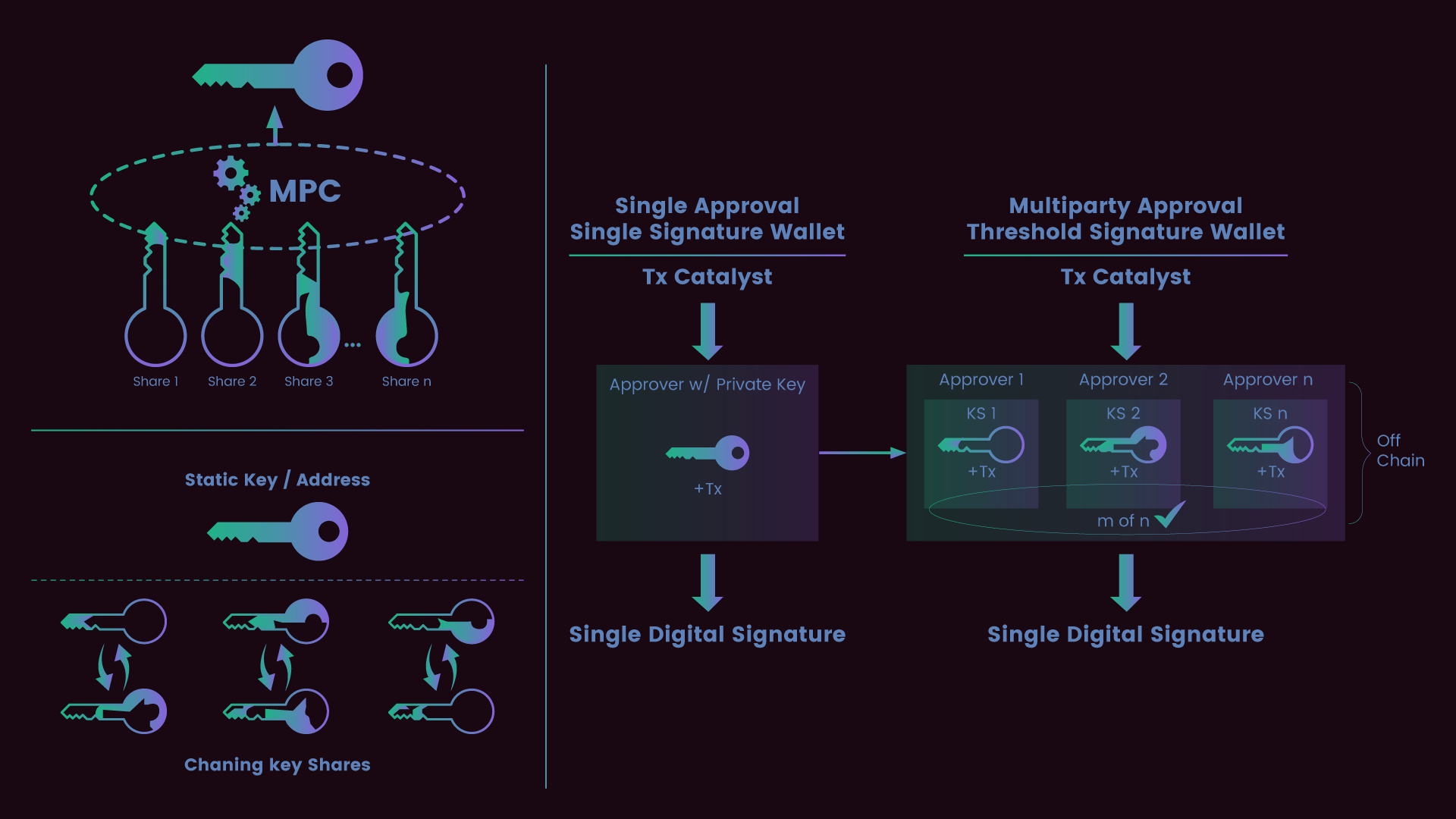
- Multi-Tier Role Assignments: Delegate permissions across roles (e.g., viewer, approver, signer) with unlimited approvers per policy, as in Safeheron MPC infrastructure.
- Time-Locked Executions: Delay large transfers until approval windows or schedules, integrating MPC key shares with AA smart contract logic.
- Compliance Hooks via Oracles: Real-time monitoring and automated checks using oracles for regulatory compliance in Blockdaemon Advanced MPC custody.
Architecting Controls for DAO Operational Flow
Implementation starts with sharding strategy. Distribute shares via threshold schemes- say, 3-of-5 for routine ops, escalating to 4-of-7 for high-value moves. AA wallets, powered by MPCAAWallet's engine, layer policies atop. Define modules: a validator contract cross-checks against whitelists, velocity caps, and KYC attestations.
Updated 2026 contexts affirm this synergy. MPC with TEEs or HSMs fortifies shards against breaches, while AA orchestrates workflows. Policies enforce limits, approvals, and locks- e. g. , transfers exceeding set amounts demand designated nods. Regulatory flux demands vigilance; jurisdictions debate custody definitions, but hybrid models tilt toward compliance by design.
CoinsDo's 2026 MPC wallet rankings spotlight seamless control, yet hybrids lead. Teams balance security with velocity: gasless batching via AA slashes costs, MPC ensures tamper-proof execution. Swing traders in DAOs leverage this for momentum plays, charting treasury health without custody drag.
Real-world DAO deployments reveal the hybrid's edge. A mid-sized treasury managing $10M and in assets configures policies where routine DeFi yields auto-approve under velocity limits, while bridge crosses demand sequential signoffs from security and ops leads. This setup, per Safeheron's MPC infrastructure basics, integrates multi-chain support with policy engines, enabling real-time compliance scans before signatures aggregate.
Hybrid Custody's Operational Advantages Over Legacy Models
Blockdaemon's advanced MPC delivers low-latency performance, but hybrid AA elevates it with programmable fallbacks. Imagine a shard compromise: AA's recovery modules trigger key rotation without downtime, roles reassigned on-chain. Fireblocks' transaction processing report underscores MPC's workflow automation, yet hybrids extend to granular permissions like per-address blacklists or oracle-verified market conditions. io. finnet's 2025 MPC custody explainer predicts trustless evolution, where manual signers vanish, replaced by policy-driven execution.
Key Features Comparison: Pure MPC vs. MPC-AA Hybrid
| Feature | Pure MPC | MPC-AA Hybrid |
|---|---|---|
| Policy Enforcement | Limited; fails at complex business logic and granular policies ❌ | Granular controls, transaction limits, time locks, real-time compliance ✅ |
| Approval Workflows | Basic policy-based approvals 🔄 | Unlimited approvers, role delegation, automated workflows ✅ |
| Recovery Options | Key share distribution challenges; limited options ❌ | Smart contract logic for recovery, seedless self-custody ✅ |
| Multi-chain Support | Strong native multi-chain asset support 🌐✅ | Enhanced seamless support with AA integration 🌐✅ |
| Latency | Industry-leading low latency signatures ⚡✅ | Optimized low latency with programmable features ⚡✅ |
DAOs thrive on velocity. Account abstraction policies enable gasless sessions, batching micro-transactions for yield optimizers. Swing traders, charting treasury momentum, execute without friction- MPC secures the vault, AA scripts the plays. CoinsDo's 2026 top MPC wallets rank seamless control high, but hybrids dominate for teams, fusing IdeaSoft's failure-proof foundations with Ripple's smart contract autonomy.
Navigating Regulatory and Implementation Hurdles
Regulatory scrutiny intensifies. Jurisdictions parse custody control- does MPC shard distribution equate to self-custody? Hybrids adapt via attestable policies, logging approvals immutably. ChainScore Labs critiques MPC's policy shortfall; AA rectifies it with on-chain verifiability, ideal for audits. Nichanan Kesonpat advocates unlimited approvers and delegations, scaling to DAO flux without governance gridlock.
Challenges persist: key ceremony logistics demand trust, AA gas overheads require optimization. Yet MPCAAWallet's fusion mitigates both, delivering enterprise-grade secure multi-user crypto wallets. Teams report 40% faster ops post-adoption, per analogous Fireblocks metrics.
Future-Proofing DAO Treasuries
2026 contexts signal maturation. MPC with AA anticipates L2 scaling, ZK proofs for privacy-enhanced policies. Granular controls evolve- AI-driven anomaly detection, dynamic quorums tied to token-weighted voting. Fystack's startup overview positions hybrids as strategic imperatives, where granular access controls MPC meets programmable intelligence.
DAO teams wielding these tools chart uncharted momentum. Treasuries secure, operations fluid- hybrid custody isn't optional; it's the new baseline for crypto sovereignty. Charts confirm: controlled flows yield sustained gains, no drag from custody relics.




No comments yet. Be the first to share your thoughts!