
Get MPC AA Wallet Right
Before you initialize an MPC AA wallet, clarify the distinction between the underlying technologies. Account abstraction (AA) defines how the wallet executes transactions on-chain, allowing for features like gas sponsorship and social recovery. Multi-party computation (MPC) defines how the wallet secures the private key by splitting it into shares across multiple devices or servers. Understanding this split prevents confusion between the user experience (AA) and the security model (MPC).
You must also distinguish MPC from MCP. MCP (Model Context Protocol) is an open standard connecting AI assistants to external tools. An "MCP wallet" enables AI agents to interact with your assets, whereas an "MPC wallet" secures the keys themselves. They are not interchangeable terms, though they can coexist in the same infrastructure. Confirm which protocol your provider supports before proceeding.
Finally, verify your infrastructure readiness. MPC wallets require a reliable network connection to coordinate key shares during signing. If you are building an enterprise solution, ensure your servers meet the latency requirements for threshold signatures. For personal use, confirm your mobile device can securely store one of the key shards without exposing it to root or jailbreak vulnerabilities.
Work through the steps
MPC AA Wallet works best as a clear sequence: define the constraint, compare the realistic options, test the tradeoff, and choose the path with the fewest hidden costs. That order keeps the advice usable instead of decorative. After each step, pause long enough to check whether the recommendation still fits the reader's actual situation. If it depends on perfect timing, unusual access, or a best-case budget, include a simpler fallback.
Common Mistakes to Avoid with MPC Wallets
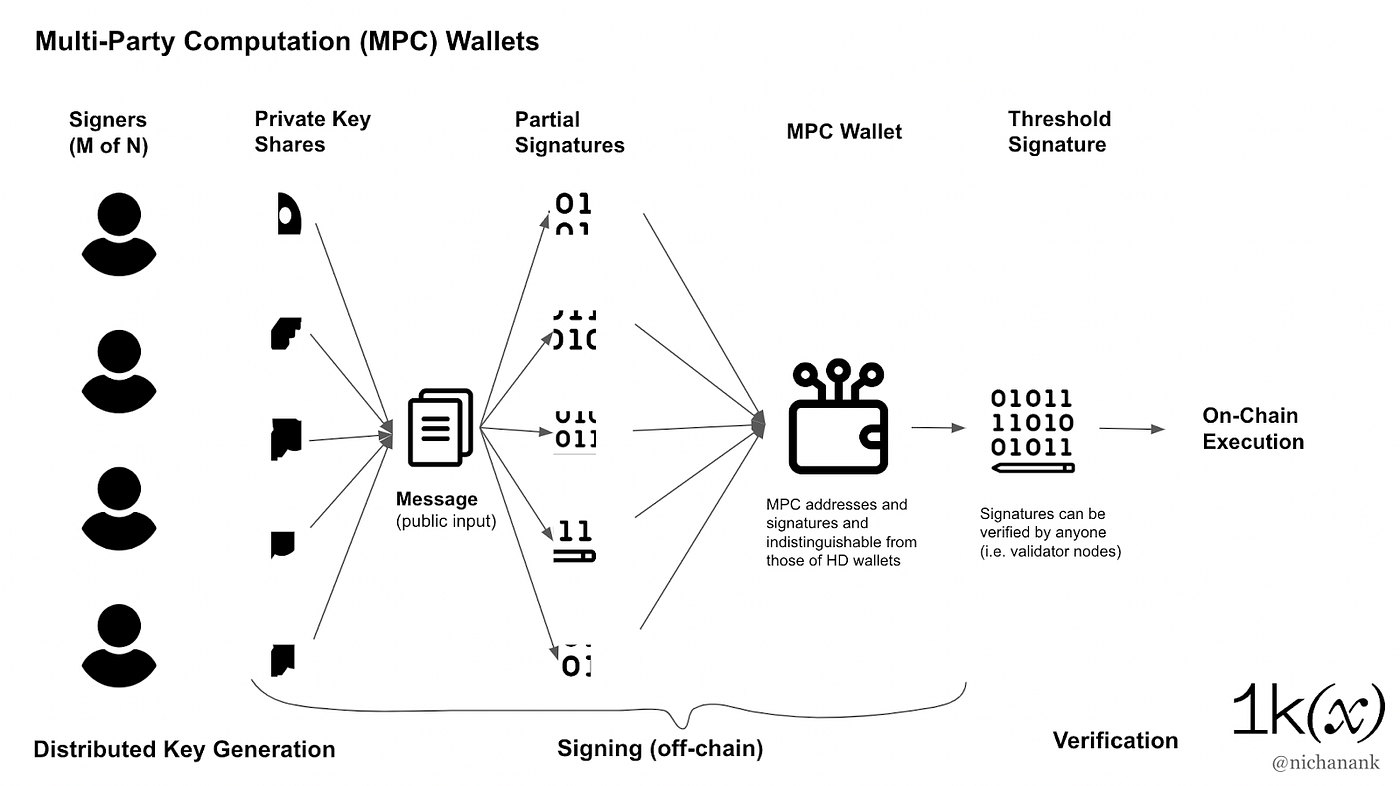
MPC (Multi-Party Computation) wallets offer robust security by splitting private keys into shares, but the technology is not immune to human error. Even with advanced cryptography, poor configuration or misunderstanding the workflow can lead to lost assets or denied transactions. Below are the most frequent pitfalls and how to sidestep them.
Ignoring Threshold Settings The security of an MPC wallet relies on the threshold signature scheme (e.g., 2-of-3 or 3-of-5). A common mistake is setting the threshold too low (e.g., 1-of-3), which effectively restores the "single point of failure" problem that MPC was designed to solve. Conversely, setting it too high (e.g., 5-of-5) creates a usability nightmare where every single party must be online to sign a transaction. Choose a threshold that balances security with your actual operational needs. If one device is lost, you should still be able to recover and sign without calling every single stakeholder.
Mixing Up MPC and MCP Confusion often arises between MPC (Multi-Party Computation) and MCP (Model Context Protocol). MPC is a cryptographic method for secure key management. MCP is an open standard for connecting AI models to external tools. An "MCP wallet" is a specific type of wallet designed to be controlled by AI assistants via this protocol. Do not assume that enabling AI features improves your cryptographic security; they are separate layers. Ensure you are configuring the correct protocol for your security goals.
Neglecting Share Recovery Many users focus entirely on the signing process and forget the recovery process. In an MPC setup, if you lose access to the device holding one of the key shares, you may be locked out permanently if you haven't secured the backup shares properly. Ensure that each share is stored in a distinct, secure location (e.g., one on your phone, one on a hardware device, one with a trusted third party). Test the recovery process before depositing significant funds.
Overlooking Gas and Network Fees MPC wallets still operate on blockchain networks, meaning they require native tokens for gas fees. A frequent error is sending transactions from an MPC wallet that holds only ERC-20 tokens but no ETH (or the relevant chain's native coin). The transaction will fail, and you may need to pay additional fees to recover the stuck assets. Always maintain a small buffer of native gas tokens in your MPC wallet.
Mpc aa wallet: what to check next
These answers address the most common technical and practical objections before you commit to an MPC AA wallet.
No comments yet. Be the first to share your thoughts!