
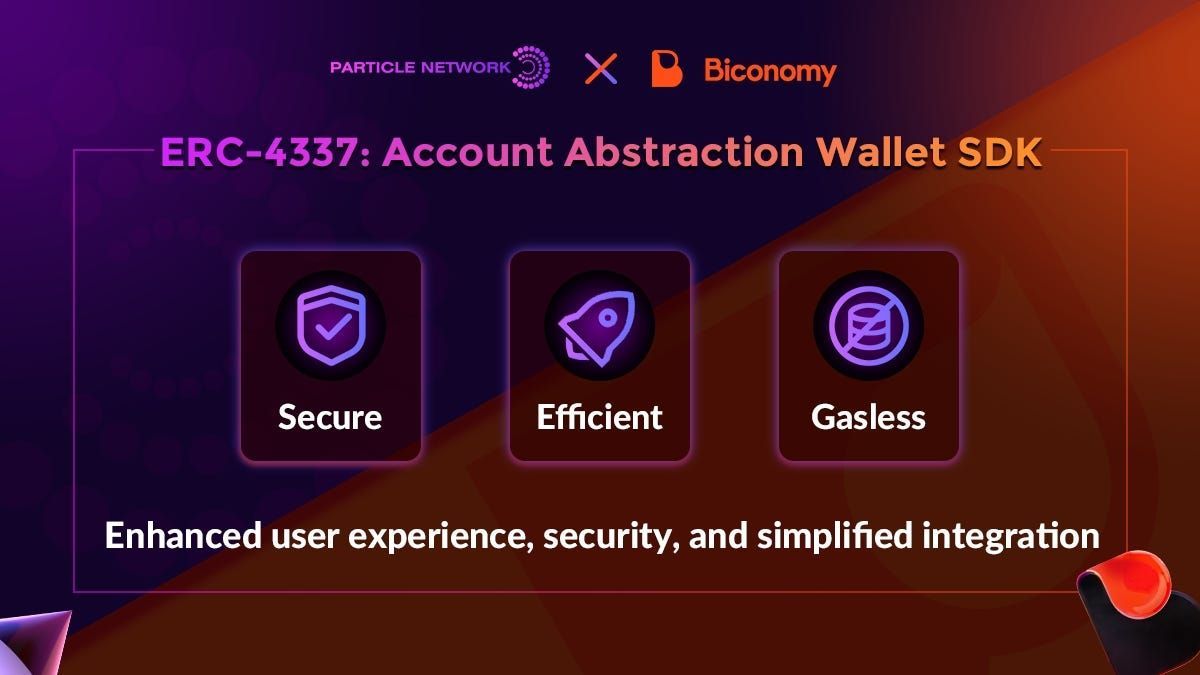
What is an MPC AA Wallet?
The MPC AA wallet represents the convergence of two distinct technologies: Account Abstraction (AA) and Multi-Party Computation (MPC). By merging these approaches, the MPC AA wallet establishes a new standard for secure crypto custody, combining the user experience benefits of smart contract wallets with the distributed security of threshold cryptography. This combination addresses the primary weaknesses of traditional wallets, such as rigid transaction structures and centralized key risks, creating a more resilient and flexible system.
Account Abstraction, defined by ERC-4337, allows wallets to be managed by smart contracts rather than simple key pairs. This enables features like social recovery, batched transactions, and session keys, significantly improving usability. However, AA wallets still rely on private keys for signing, which introduces security risks if those keys are compromised. Multi-Party Computation solves this by distributing the private key into multiple shares, ensuring no single entity holds the complete key.
When combined, MPC AA wallets offer a robust solution for both individual users and enterprises. The MPC component ensures that key shares are distributed across multiple parties, making it nearly impossible for attackers to compromise the wallet without access to multiple shares. Meanwhile, the AA component provides the flexibility and user-friendly features that have been lacking in traditional crypto wallets. This synergy makes the MPC AA wallet the emerging standard for 2026, particularly in high-stakes environments where security and usability are equally critical.
How MPC and AA Work Together
Multi-Party Computation (MPC) and Account Abstraction (AA) solve different halves of the same problem. MPC secures the keys by splitting them into shares across multiple devices or servers, ensuring no single entity can unilaterally access funds. AA handles the user experience by replacing the traditional private key with smart contract logic, allowing for features like social recovery and gas sponsorship.
When combined, they create a wallet that is both institutionally secure and consumer-friendly. The MPC engine manages the cryptographic heavy lifting in the background, while the AA layer interprets user intent and executes transactions through the blockchain. This synergy means users get the best of both worlds: the robust security of distributed key management without the complexity of traditional multi-signature setups.
Think of MPC as the vault and AA as the door. The vault (MPC) ensures that no one person can steal the contents, while the door (AA) determines who can enter and under what conditions. This architecture is becoming the standard for secure crypto custody in 2026 because it removes the friction that has historically prevented mass adoption.
Security and UX Choices That Change the Plan
The core tension in modern crypto custody is the choice between institutional-grade security and consumer-grade convenience. Standalone MPC wallets offer robust protection by distributing private key shares across multiple parties, eliminating the risk of a single compromised key. However, this security often comes at the cost of user experience, requiring complex setup and multiple sign-offs that can frustrate everyday users. Conversely, Account Abstraction (AA) wallets prioritize ease of use through features like social recovery and gas abstraction, but they often rely on centralized validators or single-signer models that introduce new vectors for compromise.
The hybrid MPC AA model bridges this gap by integrating the cryptographic strength of multi-party computation with the flexible logic of smart accounts. This approach ensures that no single entity—whether a user, a device, or a service provider—holds the complete key, while still allowing for familiar recovery methods and seamless transaction flows. By combining these technologies, the MPC AA wallet delivers a custody solution that is both resilient against attacks and intuitive for non-technical users.
To understand how these models compare in practice, consider the following breakdown of security features, recovery options, and operational complexity across standalone MPC, standalone AA, and the hybrid MPC AA architecture.
| Feature | Standalone MPC | Standalone AA | Hybrid MPC AA |
|---|---|---|---|
| Key Storage | Distributed shares | Single private key | Distributed shares |
| Recovery | Multi-sig threshold | Social/Guardians | Social + Multi-sig |
| Gas Abstraction | No | Yes | Yes |
| Single Point of Failure | None | High | None |
| User Complexity | High | Low | Medium |
| Institutional Grade | Yes | No | Yes |
This comparison highlights that while standalone MPC wallets excel in security, they lack the user-friendly features that drive mass adoption. Standalone AA wallets offer convenience but sacrifice the decentralized security guarantees that institutions require. The hybrid MPC AA wallet strikes a balance, offering distributed security without the friction of traditional multi-sig setups, making it the emerging standard for both retail and institutional users.
Why Teams Adopt MPC AA Wallets
MPC AA wallets have become the standard for teams managing digital assets because they solve the two biggest friction points in Web3: security and user experience. Traditional self-custody requires users to manage complex seed phrases, leading to high rates of lost assets. Enterprise hot wallets often rely on centralized infrastructure, creating compliance and operational risks. MPC AA wallets bridge this gap by combining institutional-grade security with the seamless interaction users expect from Web2 applications.
Compliance and Operational Security
For enterprises, the primary driver for adoption is the elimination of unilateral control. Traditional hardware security modules (HSMs) consolidate trust in a single device, which is a tempting target for attackers. MPC technology distributes key shares across multiple independent parties or devices. No single entity, not even the service provider, holds the complete private key. This architecture ensures that a breach of one server or device does not compromise the assets.
This distributed model also simplifies compliance. Because key shares can be managed with multi-signature requirements, teams can enforce strict internal controls. For example, a treasury might require two out of three key holders to approve a transaction. This provides an audit trail and prevents rogue actions, satisfying regulatory requirements for asset protection without sacrificing the speed needed for daily operations.
Streamlined User Onboarding
Account abstraction (AA) handles the complexity of the blockchain underneath, allowing teams to onboard users without forcing them to manage private keys. Users can log in with familiar methods like email or social accounts. The MPC infrastructure handles the key generation and storage in the background. This reduces onboarding friction significantly, as users do not need to memorize seed phrases or install complex wallet extensions.
This combination allows teams to build products that feel like traditional finance applications but operate on decentralized networks. Developers can implement features like sponsored gas fees, session keys, and social recovery, all while maintaining the security guarantees of MPC. The result is a wallet infrastructure that scales with the team’s needs, supporting everything from simple retail payments to complex institutional treasury management.
How MPC Wallets Work
MPC wallets use secret sharing schemes, most commonly Shamir's Secret Sharing, to divide a private key into multiple "shares." Instead of storing a single private key, the system distributes these shares across independent devices, servers, or parties. No single participant ever holds the complete key.
When a transaction needs authorization, these shares collaborate to generate a valid digital signature without ever reconstructing the full private key. This eliminates the risk of a single point of failure inherent in traditional wallets, ensuring that compromising one device does not lead to asset theft.
No comments yet. Be the first to share your thoughts!