
Get an MPC AA Wallet Right: Prerequisites
Before you install or deploy, ensure your infrastructure can handle the specific demands of Multi-Party Computation (MPC) combined with Account Abstraction (AA). These two technologies interact differently than traditional key management, so skipping these checks often leads to failed transactions or security gaps.
1. Verify Network Compatibility
Not all blockchains support ERC-4337 Account Abstraction natively. Ensure your target chain has a valid bundler and paymaster infrastructure. If you are building on EVM-compatible chains, confirm that the RPC node supports eth_sendUserOperation. Non-EVM chains require entirely different AA implementations.
2. Select Your Key-Sharing Model Decide how you will split the private key. Most MPC AA wallets use a 2-of-3 or 3-of-3 scheme. You need to determine which party holds which share:
- User Device: Usually holds one share, secured by biometrics or a passkey.
- Backup Server: Holds another share for recovery if the device is lost.
- Social/Enterprise Node: Holds the final share, often used for institutional custody or multi-sig governance.
3. Prepare for Gas and Paymasters AA wallets do not require the user to hold the native token for gas. However, your backend must integrate a Paymaster contract to sponsor these fees. If you are testing locally, ensure your testnet faucet provides the specific ERC-20 token required by your Paymaster, not just the native coin.
4. Audit Your Smart Contract Logic
Account Abstraction allows custom validation logic. Before mainnet deployment, audit the validateUserOp function in your EntryPoint contract. Ensure it correctly validates signatures from the MPC shares and does not allow replay attacks or unauthorized state changes.
-
Confirm ERC-4337 support on target chain
-
Define MPC key-share distribution (e.g., 2-of-3)
-
Integrate Paymaster for gas abstraction
-
Audit validateUserOp logic for replay protection
Skipping these steps forces you to retrofit security later. A properly configured MPC AA wallet separates the signing process from the execution logic, but only if the underlying infrastructure is aligned.
Work through the steps
MPC AA Wallet works best as a clear sequence: define the constraint, compare the realistic options, test the tradeoff, and choose the path with the fewest hidden costs. That order keeps the advice usable instead of decorative. After each step, pause long enough to check whether the recommendation still fits the reader's actual situation. If it depends on perfect timing, unusual access, or a best-case budget, include a simpler fallback.
Fix common mistakes
Many users confuse Account Abstraction (AA) with Multi-Party Computation (MPC) because both modernize wallet security, but they solve different problems. AA makes wallets programmable and user-friendly, while MPC splits the private key to remove single points of failure. Mixing these concepts leads to poor security architectures.
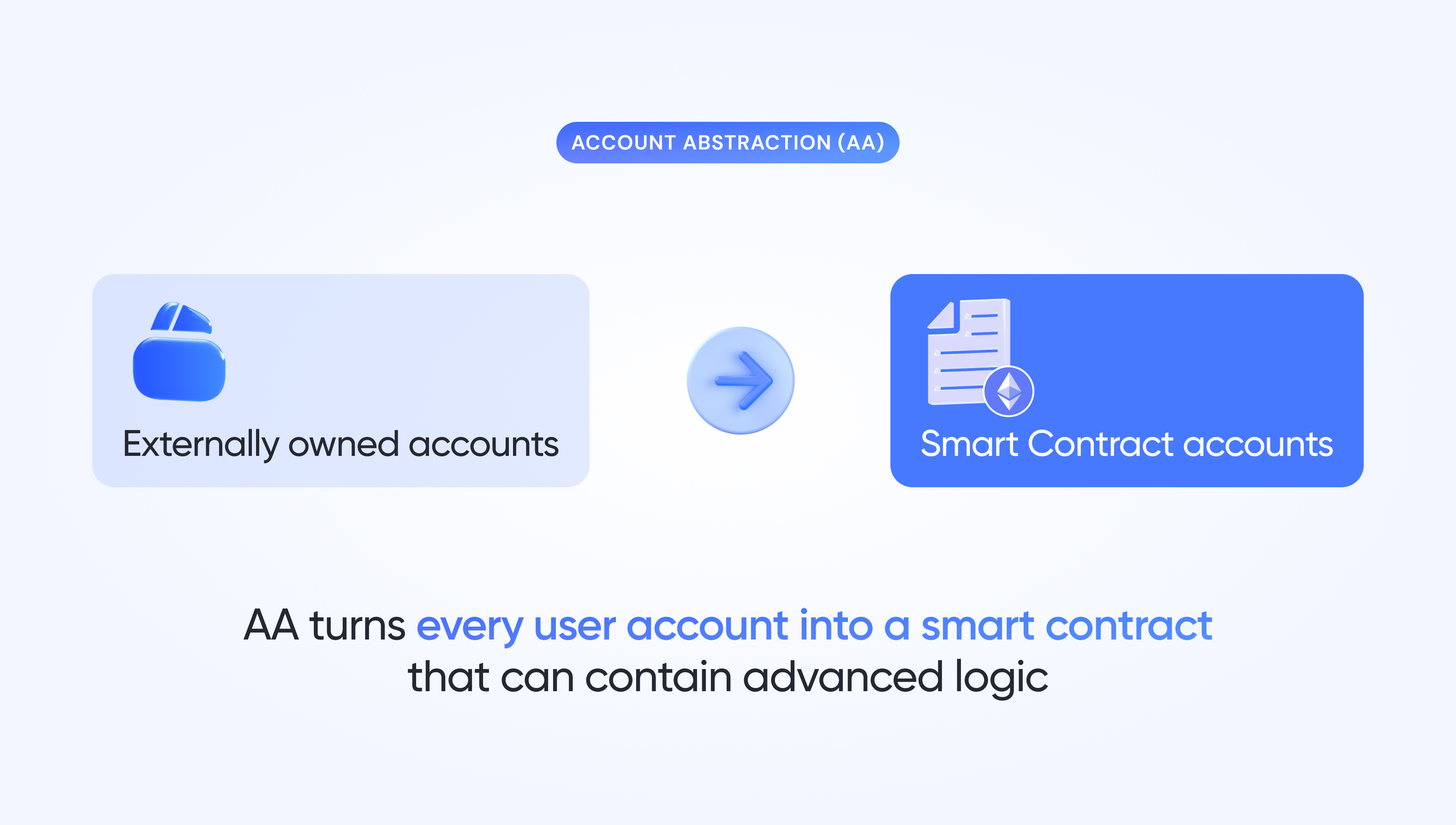
Mistake 1: Treating AA as a security upgrade. Account Abstraction replaces the single private key with a smart contract, but it doesn’t inherently split the key. If you rely solely on AA without MPC, you still have a single point of failure. If your seed phrase is stolen, your assets are gone. Use MPC to split the key, then layer AA on top for features like social recovery or gas sponsorship.
Mistake 2: Misunderstanding "MCP" as a wallet standard. "MCP" usually refers to the Model Context Protocol, which connects AI assistants to external tools. It is not a wallet standard. Don’t confuse "MPC" (Multi-Party Computation) with "MCP." MPC uses secret sharing (like Shamir’s Secret Sharing) to divide keys across multiple devices. MCP is an AI integration layer. Using the wrong term in documentation or development can lead to significant architectural errors.
Mistake 3: Assuming MPC eliminates all risk. MPC removes the single point of failure, but it introduces complexity in key reconstruction. If your threshold policy is set too high (e.g., 3-of-3), losing one device locks you out. If set too low (e.g., 1-of-3), it defeats the purpose. Choose a threshold that balances security and recoverability. Also, ensure your MPC provider uses secure enclaves (TEEs) to protect key shares during computation.
Mistake 4: Ignoring the non-MPC alternative. Non-MPC wallets rely on a single private key stored on one device. They are simpler but vulnerable to device loss or theft. If you’re building for enterprise or high-value users, non-MPC is rarely sufficient. For casual users, a well-secured non-MPC wallet might be enough, but for most modern applications, MPC is the baseline for security.
Mpc aa wallet: what to check next
Before committing to an MPC AA wallet, it helps to separate the security mechanics from the user experience upgrades. Many readers confuse Multi-Party Computation with Account Abstraction because they often appear together in modern wallets. Understanding where one technology ends and the other begins clarifies which risks you are actually mitigating.
How do MPC wallets work?
MPC wallets rely on secret sharing schemes, most commonly Shamir’s Secret Sharing, to divide a private key into multiple "shares." Keys are stored across multiple locations, some with the service provider and one with the customer's device or server. Each share is distributed to an independent device, server, or party. No single entity ever holds the complete key, meaning a compromised server or lost phone cannot alone authorize a transaction.
What is an MPC wallet?
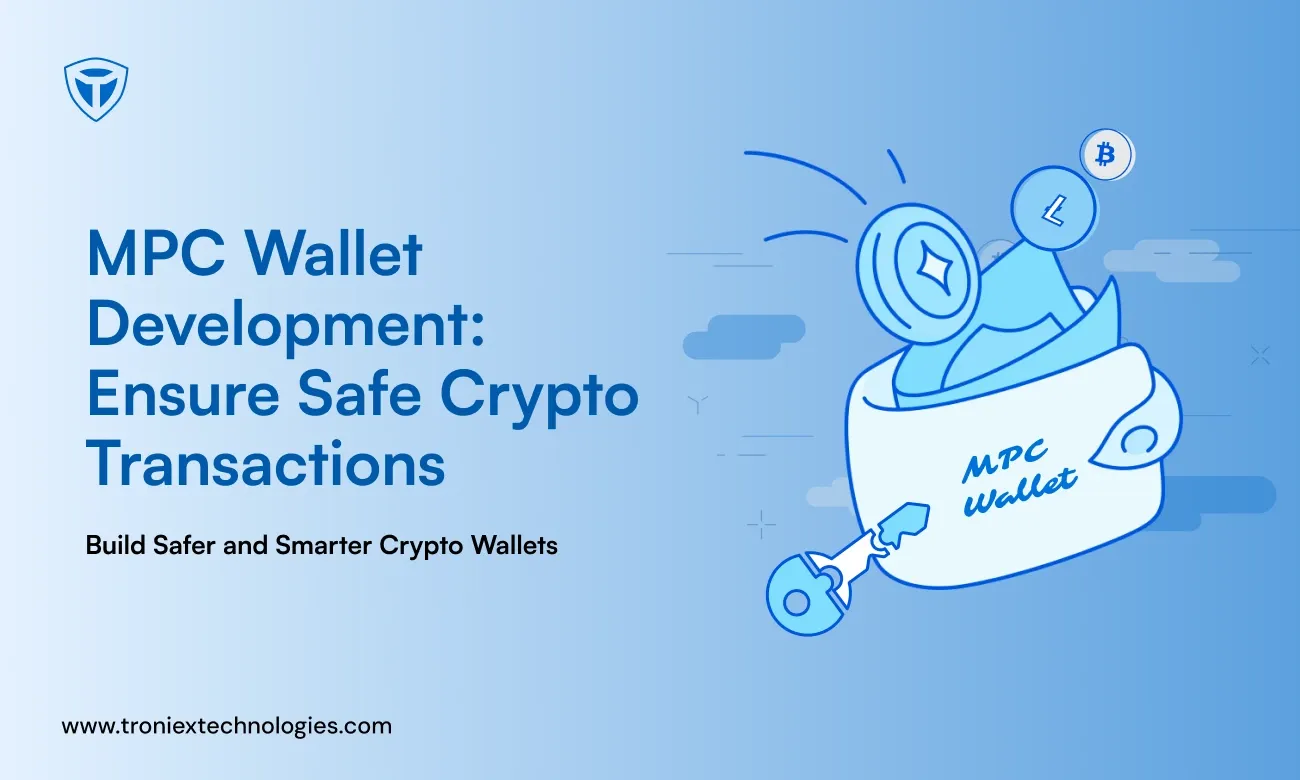
An MPC wallet uses Multi-Party Computation to distribute the cryptographic responsibility of signing transactions. Unlike traditional wallets where one entity holds the complete private key, MPC wallets ensure no single party ever has access to the full key, even during transaction signing. This architecture eliminates the single point of failure inherent in standard key management, making it significantly harder for hackers to steal funds through server breaches or phishing attacks.
What are the advantages of an MPC wallet?
The primary advantage is the elimination of a single point of failure. By distributing key shares, MPC wallets ensure that no individual participant can act alone to authorize transactions or compromise security. Another major benefit is recoverability. If a user loses their device, the key shares held by trusted recovery services or backup devices can reconstruct the signing capability without exposing the raw private key to the user or a single central authority.
What is the difference between MPC and Account Abstraction?
Account Abstraction (AA) and Multi-Party Computation (MPC) address different layers of the wallet experience. AA upgrades the smart contract logic to allow for social recovery, gasless transactions, and session keys. MPC upgrades the key management security by splitting the private key. They are complementary: you can use AA for better UX and MPC for stronger security, or use them independently depending on your threat model.
No comments yet. Be the first to share your thoughts!