Get mpc aa wallet right
Before you build an MPC AA wallet, align two distinct technologies. Account abstraction (AA) changes how the wallet executes transactions on-chain. Multi-party computation (MPC) changes how the private key is generated and stored off-chain. Mixing them creates a powerful tool, but it also doubles the complexity.
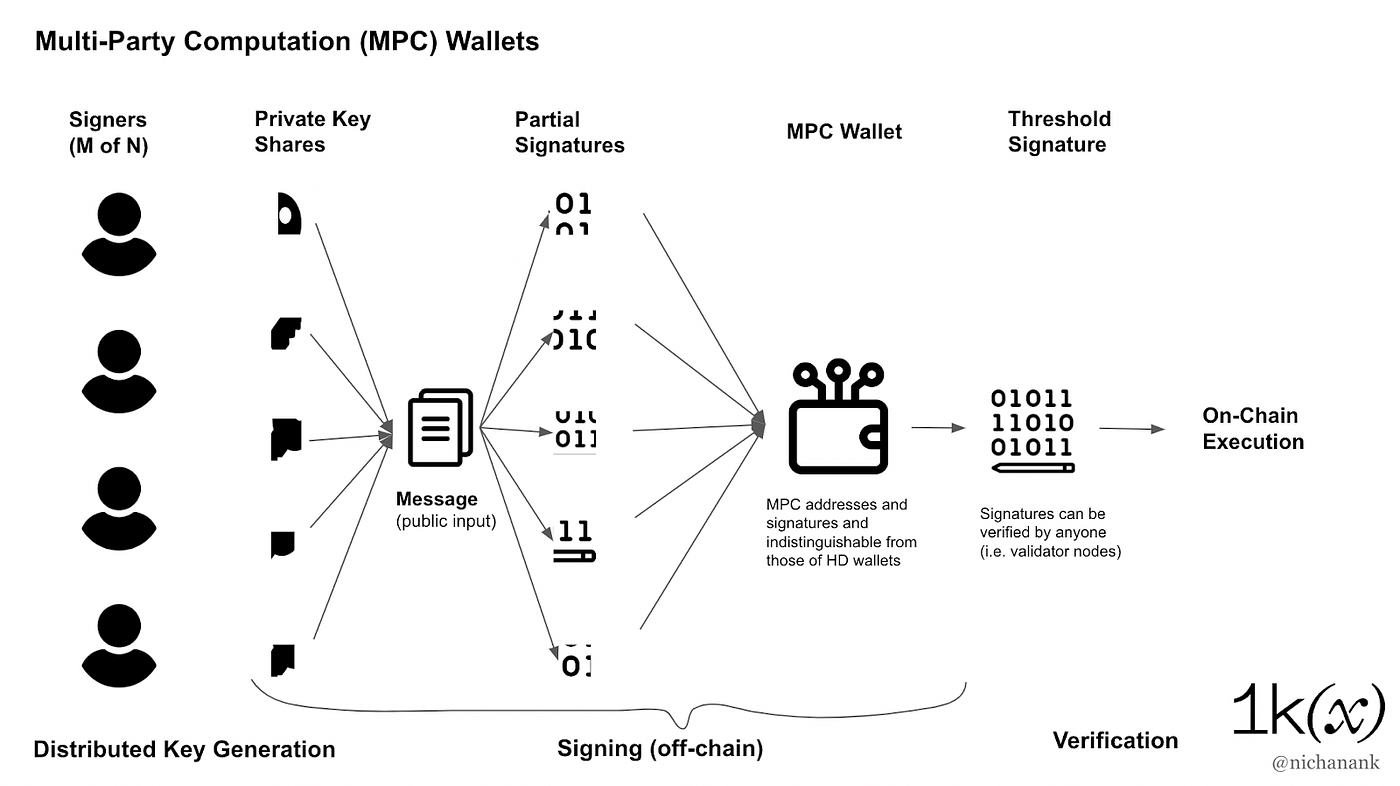
Start with the security model. Traditional wallets store a single private key. If that key is stolen, the assets are gone. MPC splits that key into shares. These shares live on different devices or servers. No single point of failure exists. You must decide who holds which share. The user’s device, a cloud provider, and social recovery guardians are common choices.
Next, define the signer threshold. This number determines how many shares are needed to sign a transaction. A 2-of-3 setup is standard for personal use. It balances security with usability. If you lose one device, you can still recover access. For high-value corporate treasuries, a 3-of-5 or higher threshold is safer but slower.
Finally, choose your AA implementation. You need an ERC-4337-compatible smart contract. This contract acts as the entry point for all transactions. It checks signatures from the MPC scheme. It also handles gas payment and session keys. Ensure your chosen MPC provider supports ERC-4337 natively. Trying to bolt AA onto a legacy MPC setup often leads to fragile integrations.
Work through the steps
MPC AA Wallet works best as a clear sequence: define the constraint, compare the realistic options, test the tradeoff, and choose the path with the fewest hidden costs. That order keeps the advice usable instead of decorative. After each step, pause long enough to check whether the recommendation still fits the reader's actual situation. If it depends on perfect timing, unusual access, or a best-case budget, include a simpler fallback.
Fix common mistakes
Even with robust security layers like Multi-Party Computation (MPC) and Account Abstraction (AA), users often undermine their own protection through configuration errors or misunderstanding how the technology works. These mistakes usually stem from conflating traditional wallet behaviors with the new capabilities of AA, or from mismanaging the distributed nature of MPC key shares.
One frequent error is treating an MPC wallet like a standard hot wallet. In traditional setups, losing your seed phrase means losing access forever. In MPC, the private key is split into shards. If you lose the shard stored on your device but keep the one with the provider (or vice versa, depending on your threshold setup), you can often recover access. However, if you assume you need to back up every shard individually like a traditional mnemonic, you create unnecessary complexity and potential points of failure. Always clarify with your provider which shards are user-held and which are provider-held.
Another common pitfall is ignoring gas fee abstraction. Account Abstraction allows for sponsored transactions and paymaster services, but not all dApps or networks support this seamlessly. Users often try to execute complex AA-enabled transactions without ensuring they have sufficient native gas tokens (like ETH) for the base layer, even if a paymaster covers the execution fee. This leads to failed transactions and wasted time. Always verify the gas requirements of the specific dApp before interacting.
Finally, many users overlook the importance of session keys. AA wallets allow for granular permissions, such as limiting a dApp’s access to a specific token or a daily spend limit. Failing to set these limits effectively gives dApps full control over your assets during the session. Always review and restrict permissions rather than granting unlimited approval, turning the flexibility of AA into a security advantage rather than a vulnerability.
Mpc aa wallet: what to check next
Before committing to a Multi-Party Computation (MPC) Account Abstraction (AA) wallet, it helps to separate the security mechanics from the user experience upgrades. These answers address the most common technical and practical objections readers raise during evaluation.
The distinction between AA and MPC is often confused. Account Abstraction upgrades the smart contract logic of your wallet, allowing for features like social recovery and gas sponsorship. MPC upgrades the cryptographic security of the key itself. The most robust 2026 wallets combine both: AA for usability and MPC for security.
No comments yet. Be the first to share your thoughts!