What an MPC AA wallet actually is
An MPC AA wallet merges two distinct technologies into a single custody layer: Multi-Party Computation (MPC) for key security and Account Abstraction (AA) for transaction logic. Instead of choosing between the security of MPC or the flexibility of AA, this hybrid architecture uses both to solve the specific friction points of traditional self-custody.
Traditional wallets rely on a single private key stored on one device. If that device is lost or compromised, the funds are gone. An MPC wallet distributes that key into multiple "shards" held by different parties. No single entity ever holds the complete key, making theft nearly impossible. However, standard MPC solutions often lack the advanced transaction features found in modern smart contracts.
Account Abstraction flips the script by treating the wallet itself as a smart contract. This allows for programmable features like social recovery, paymasters, and batched transactions. By integrating MPC, the AA wallet ensures that these programmable features don't compromise security. The key remains fragmented and secure, while the smart contract handles the user experience.
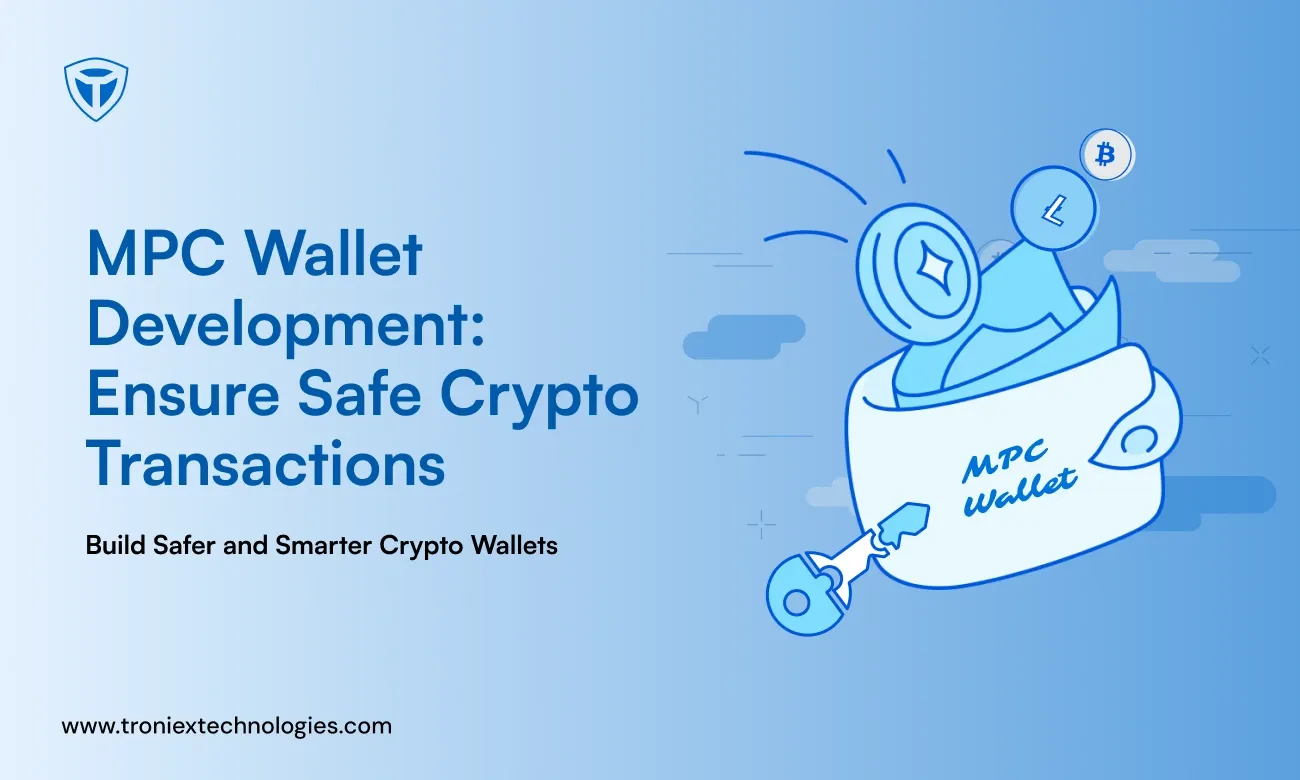
This combination addresses the "custody vs. convenience" dilemma. Users get the robust security of distributed key management without sacrificing the intuitive, gas-less, and recoverable experiences that Account Abstraction provides. It is not just a sum of its parts; the integration creates a new standard for how digital assets are stored and managed.
How the MPC Engine and AA Contract Work Together
An MPC AA wallet combines two distinct technologies into a single transaction flow. The smart contract handles the rules and permissions, while the multi-party computation engine handles the actual cryptographic signing. This separation allows for flexible session management without sacrificing security.
1. User Initiates a Transaction
The user requests an action, such as swapping tokens or transferring ETH. Instead of signing with a single private key, the request is sent to the smart contract deployed on-chain. The contract acts as the gatekeeper, checking if the user has permission to perform this specific action.
2. AA Contract Validates and Bundles
The Account Abstraction contract evaluates the request against predefined rules. It checks for valid signatures, sufficient balance, and any session key constraints. If the request is valid, the contract packages it into a "user operation" (op). This step often includes paymaster logic, allowing the transaction to be sponsored or batched for gas efficiency.
The smart contract verifies the user's intent against its internal rules. It ensures the request fits within the allowed scope of a session key or general permission set. If valid, the contract bundles the transaction data into a user operation structure.
Once the contract approves the operation, it triggers the MPC engine. The transaction data is split into cryptographic shards and distributed to the participating key holders or nodes. No single entity ever sees the complete private key.
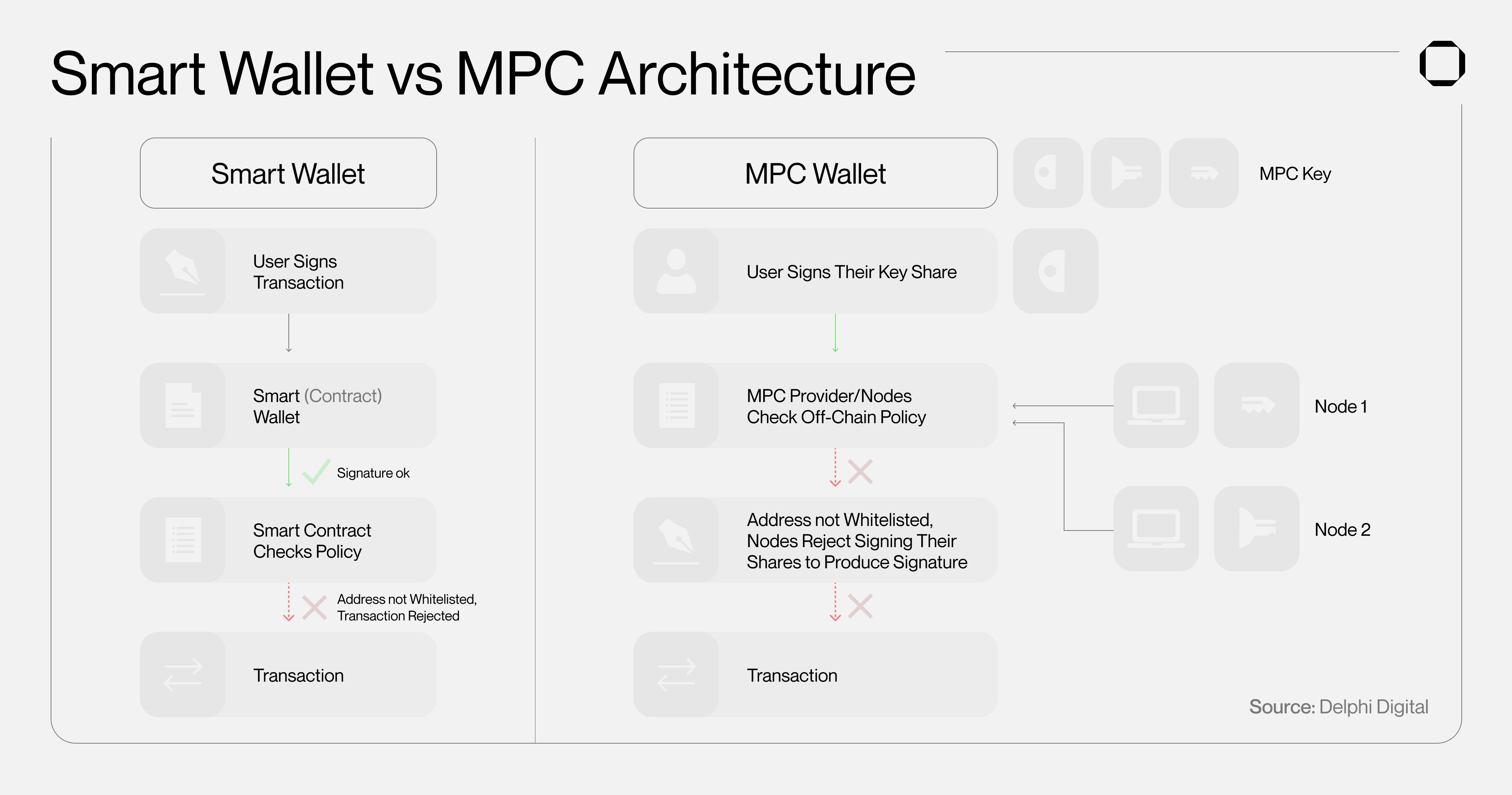
The MPC nodes sign their respective shards and return the partial signatures to the smart contract. The contract then reconstructs the final valid signature. This signature proves the transaction was authorized by the legitimate MPC AA wallet owners.
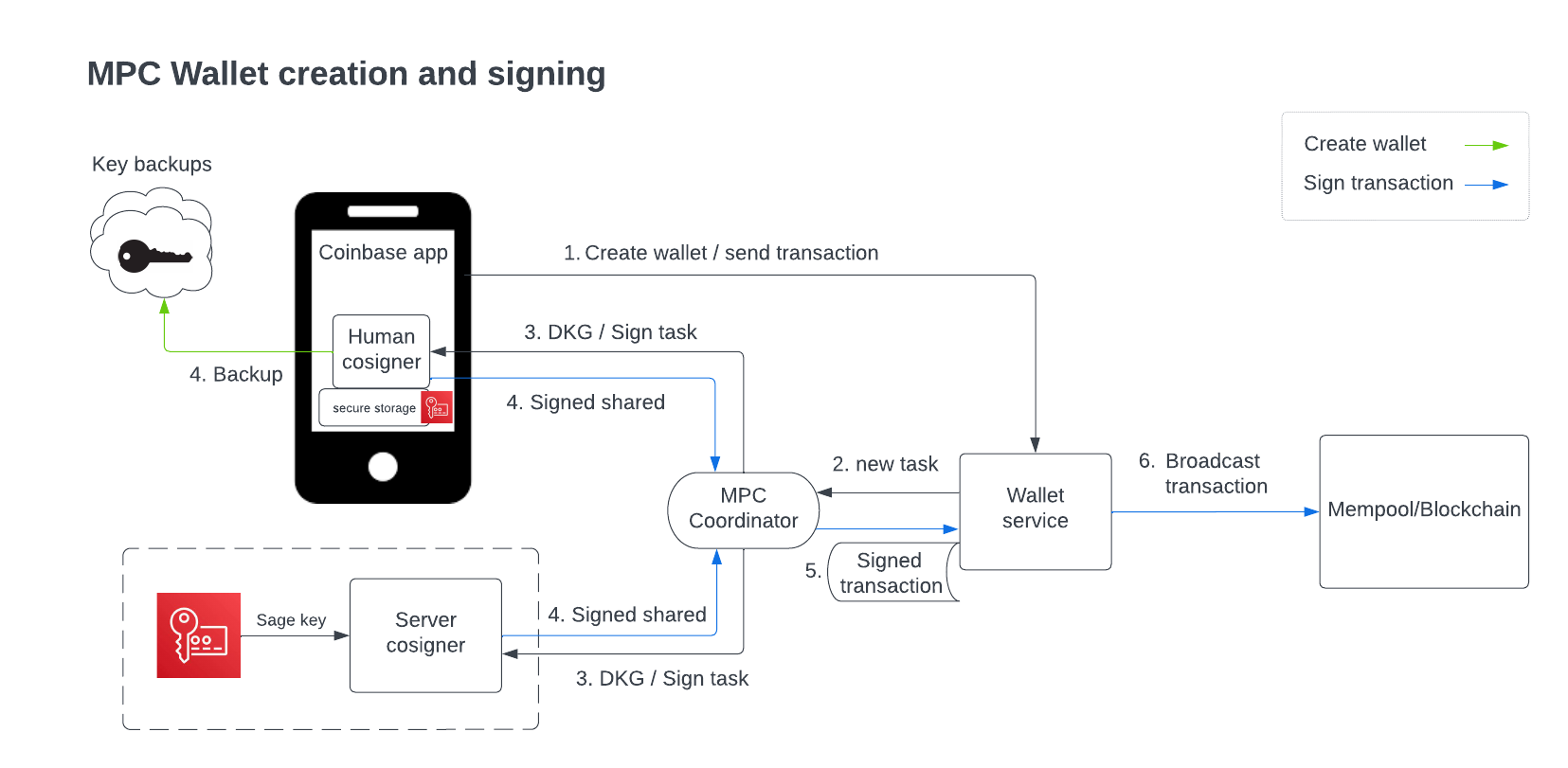
With the reconstructed signature, the user operation is submitted to the mempool. Bundlers pick up the operation, pay the gas fees (if sponsored by a paymaster), and ensure the transaction is executed on-chain. The MPC AA wallet’s state is updated accordingly.
Why This Integration Matters
Traditional MPC wallets often rely on Externally Owned Accounts (EOA), which lack the ability to bundle transactions or enforce complex rules. By integrating with Account Abstraction, the MPC AA wallet gains the ability to manage session keys, sponsor gas, and implement custom validation logic. This creates a more user-friendly experience while maintaining the high security standards of multi-party computation.
The combination allows developers to build wallets that feel like Web2 apps—offering social login, account recovery, and batched transactions—without exposing users to the risks of single-point key failure.
Comparing MPC, AA, and hybrid approaches
Choosing between standalone Account Abstraction (AA) and Multi-Party Computation (MPC) often feels like picking between speed and security. In practice, they solve different problems. AA simplifies the user experience through smart contract logic, while MPC secures the key itself by splitting it across multiple devices. The best choice depends on whether you prioritize convenience or institutional-grade protection.
Standalone Account Abstraction
AA wallets replace the traditional single private key with a smart contract. This allows for features like social recovery, where friends or trusted devices help regain access if you lose your phone. It also enables gas sponsorship, letting apps pay transaction fees in their own tokens. However, the single private key remains a critical point of failure; if that key is stolen, the attacker has full control.
Standalone MPC Wallets
MPC wallets split the private key into shards distributed across multiple devices or servers. No single device holds the full key, making it impossible for one compromised device to steal funds. This approach offers superior security for high-value assets but often requires more complex setup and multiple devices to sign transactions. It lacks the built-in programmability of AA, focusing purely on key management.
The MPC AA Hybrid
Combining MPC and AA creates the most robust solution. The MPC layer secures the key shards, while the AA layer handles the transaction logic and user experience. This hybrid approach allows for social recovery even if a key shard is lost, as the remaining shards can still participate in the signing process alongside smart contract logic. It is the preferred architecture for enterprise and high-net-worth users.
Side-by-Side Comparison
The following table breaks down the trade-offs between these three approaches across security, user experience, and cost.
| Feature | Standalone AA | Standalone MPC | MPC AA Hybrid |
|---|---|---|---|
| Security Model | Single private key | ||
| Security Model | Key sharding | ||
| Security Model | Sharded + smart contract | ||
| User Experience | Simple, social recovery | ||
| User Experience | Complex, multi-device | ||
| User Experience | Streamlined, flexible | ||
| Gas Costs | Sponsored possible | ||
| Gas Costs | Standard EOA fees | ||
| Gas Costs | Sponsored possible | ||
| Programmability | High (smart contract) | ||
| Programmability | Low (key management) | ||
| Programmability | High (smart contract) |
Building an MPC AA wallet step by step
MPC AA Wallet works best as a clear sequence: define the constraint, compare the realistic options, test the tradeoff, and choose the path with the fewest hidden costs. That order keeps the advice usable instead of decorative. After each step, pause long enough to check whether the recommendation still fits the reader's actual situation. If it depends on perfect timing, unusual access, or a best-case budget, include a simpler fallback.

Common pitfalls in MPC AA implementation
Use this section to make the MPC AA Wallet decision easier to compare in real life, not just on paper. Start with the reader's actual constraint, then separate must-have requirements from details that are merely nice to have. A practical choice should survive normal use, maintenance, timing, and budget. If a recommendation only works in an ideal situation, call that out plainly and give the reader a fallback path.
The simplest way to use this section is to write down the must-have criteria first, then compare each option against those criteria before weighing nice-to-have features.
No comments yet. Be the first to share your thoughts!