The shift to hybrid custody
For years, the crypto industry operated under a rigid trade-off: you could have security, or you could have usability, but rarely both. Traditional Multi-Party Computation (MPC) wallets offered robust security by splitting private keys into shards across multiple devices or servers, but the user experience was often clunky, requiring complex multi-step approvals for every transaction. Conversely, Account Abstraction (AA) introduced programmable smart contract wallets that allowed for social recovery, gasless transactions, and batched operations, but initially struggled with key management that was either too centralized or too complex for average users.
The MPC AA wallet 2026 represents the convergence of these two paradigms. This hybrid custody model integrates the cryptographic security of MPC with the programmable flexibility of AA. Instead of choosing between a secure but rigid infrastructure and a flexible but vulnerable one, developers now build wallets where the key generation and signing happen securely via MPC, while the transaction execution and policy logic are handled by smart contracts. This structural evolution solves the longstanding UX vs. Security trade-off, allowing for institutional-grade protection without sacrificing the fluidity users expect from modern web applications.
This convergence is not just a theoretical upgrade; it is reshaping how digital assets are managed. By combining MPC’s distributed key shares with AA’s ability to define custom validation rules, the MPC AA wallet 2026 enables features like threshold signatures that are both secure and context-aware. For example, a wallet can enforce a policy where large transactions require multiple MPC key shares, while small, everyday transactions are signed automatically by a single shard, all within a seamless smart contract interface. This balance is critical for mass adoption, as it removes the friction that has historically hindered the adoption of secure crypto wallets.
How MPC and AA work together
Account Abstraction and Multi-Party Computation are often discussed as separate innovations, but their synergy defines the modern wallet architecture. Understanding this stack requires looking at the problem in two layers: the security of the key and the flexibility of the interface.
The Security Layer: MPC
Multi-Party Computation (MPC) operates at the cryptographic foundation. Instead of storing a single private key that can be stolen or lost, MPC splits the key into multiple "shares." These shares are distributed across different devices or servers. No single party ever holds the complete key. When a transaction needs to be signed, the shares collaborate to produce a valid signature without ever revealing the underlying secret. This eliminates the risk of a single point of failure, making it significantly harder for attackers to compromise funds through phishing, malware, or physical theft.
The Programmability Layer: AA
Account Abstraction (AA) operates at the smart contract level. It replaces the standard externally-owned account (EOA) with a contract that can enforce custom logic. This layer handles the user experience and transaction execution. AA allows for features like social recovery, where a trusted contact can help restore access if you lose your device. It also enables session keys, which let dApps interact with your wallet for a limited time without requiring a signature for every single action. This turns the wallet from a static vault into a programmable interface that adapts to how users actually interact with blockchain applications.
The Synergy
When combined, MPC and AA create a wallet that is both secure and user-friendly. MPC ensures that the keys backing the account are never exposed, while AA ensures that the account itself can be managed flexibly. The result is a system where security is baked into the cryptography, but usability is handled by smart contract logic. This combination addresses the two biggest hurdles in crypto adoption: the fear of losing funds and the complexity of managing keys.
Top MPC AA providers compared
Choosing the right MPC AA wallet depends on your specific infrastructure needs. The market has consolidated around three primary platforms: Fireblocks for institutional scale, ZenGo for consumer accessibility, and Coinsdo for developer programmability. Each handles the split of private keys and smart contract execution differently.
The following comparison highlights the core differences in security models, target audiences, and feature sets. This allows you to quickly identify which platform aligns with your operational requirements.
| Provider | Security Model | Best For | AA Features |
|---|---|---|---|
| Fireblocks | Multi-party computation with hardware security modules (HSMs) | Institutions and enterprises | Limited native smart contract support |
| ZenGo | Threshold signature scheme (TSS) without key shares | Retail and consumer users | Basic account abstraction for recovery |
| Coinsdo | Distributed key generation with MPC | Developers and Web3 startups | Full ERC-4337 compatibility and SDK |
Fireblocks dominates the institutional sector by integrating MPC with strict operational controls. Its architecture relies on HSMs to store key shares, making it the standard for asset managers and banks requiring high-volume transaction security. However, this heavy infrastructure focus means its programmability features are less flexible for custom smart contract logic compared to native AA solutions.
ZenGo takes a different approach by eliminating private keys entirely. Instead of splitting keys, it uses a threshold signature scheme where the user keeps one share and ZenGo keeps the other. This design simplifies the user experience significantly, removing the need for seed phrases. While excellent for consumer adoption, this model offers less granular control for developers building complex on-chain applications.
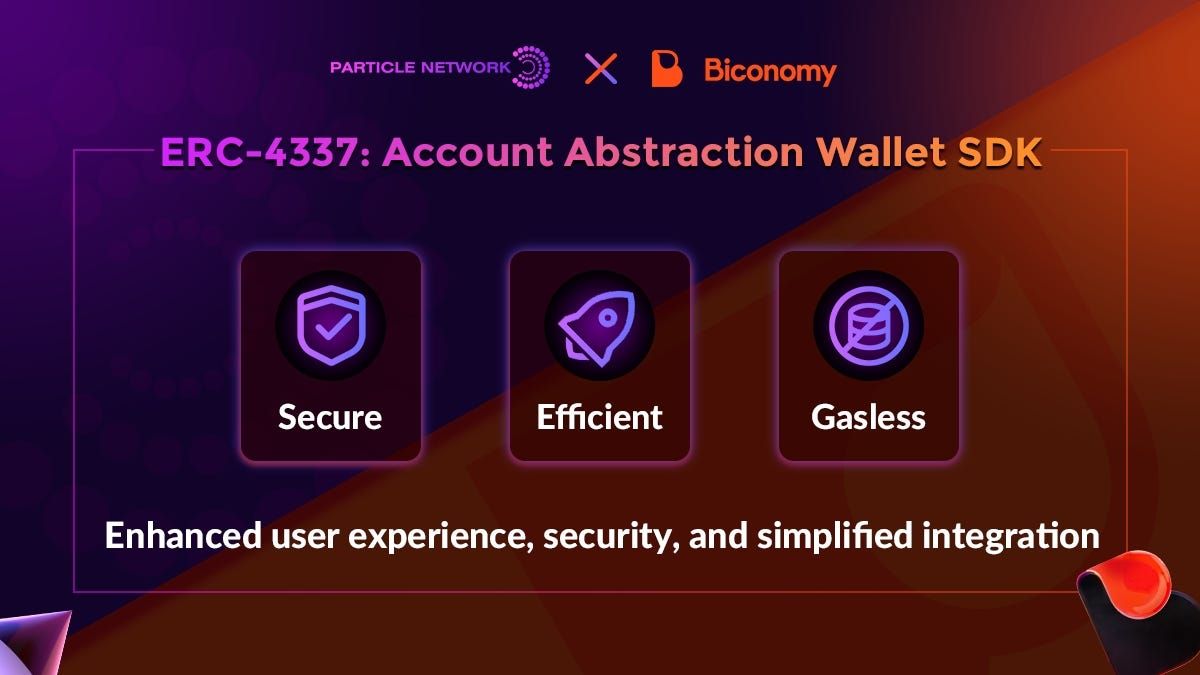
Coinsdo positions itself as a developer-first MPC AA provider. It focuses on seamless integration with ERC-4337 standards, allowing teams to build custom smart accounts without managing complex key infrastructure. This makes it ideal for startups and dApps that need programmable security features, such as social recovery or session keys, without the overhead of institutional-grade compliance tools.
Security advantages over seed phrases
Traditional self-custody relies on a single private key, often stored as a 12- or 24-word seed phrase. This creates a single point of failure: lose the phrase, and your assets are gone forever; share it, and your funds are instantly compromised. MPC AA wallets eliminate this binary risk by splitting the private key into mathematical "secret shares" distributed across multiple parties or devices. No single entity or location holds the complete key, making theft or accidental loss far less likely.
Account Abstraction (AA) further hardens this setup by replacing the traditional Externally Owned Account (EOA) model with smart contract logic. Instead of a static signature that must be kept secret, AA enables programmable security policies. You can set up multi-factor authentication, social recovery, or transaction limits that execute on-chain. If a device is lost, the smart contract verifies your identity through alternative means rather than demanding a physical seed phrase.
This combination means you are no longer your own backup service. The security model shifts from "protect one secret" to "verify multiple signals." Even if an attacker compromises one share or one device, they cannot reconstruct the key or authorize a transaction without meeting the programmable criteria defined by the smart contract. This structure significantly raises the bar for malicious actors while removing the burden of perfect physical security from the user.
Choosing the right implementation
Selecting an MPC AA wallet requires matching the technology to your specific operational needs. As enterprises move beyond experimentation, standardizing on MPC as core wallet infrastructure is becoming the norm for 2026. The decision hinges on whether you prioritize institutional-grade custody or developer-friendly programmability.
| Feature | Institutional Grade | Developer Friendly |
|---|---|---|
| Key Management | Multi-party with TEEs | Shamir Secret Sharing |
| UX Focus | Compliance & Audit | Gasless & Social Recovery |
| Integration | API-heavy | SDK & ERC-4337 |
Use this comparison to guide your final selection. The right MPC AA wallet balances security with the flexibility your users expect.
No comments yet. Be the first to share your thoughts!