
What the MPC AA Wallet Actually Is
An MPC AA wallet merges Multi-Party Computation (MPC) with Account Abstraction (AA) to solve the trade-off between security and usability. MPC secures the underlying keys by splitting them across devices, while AA manages the user experience through programmable smart contract logic. This hybrid approach eliminates the single point of failure inherent in traditional wallets while enabling advanced features like social recovery and gas sponsorship.
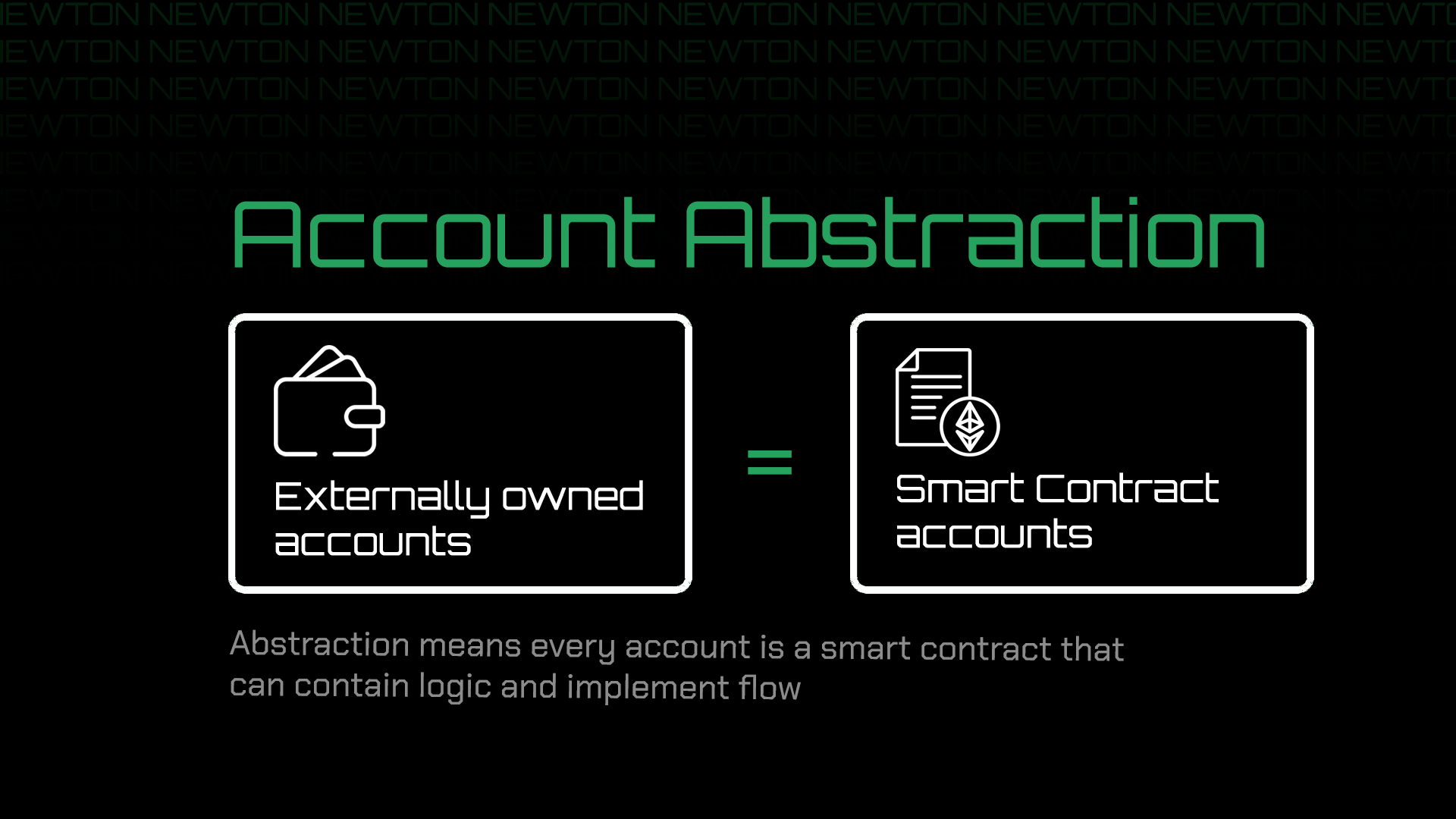
At the core is a clear separation of concerns. MPC handles key management, ensuring no single party holds the complete private key. Transactions are authorized through collaborative cryptographic computation, requiring consensus among shards to sign. This ensures that even if one device is compromised, funds remain safe. Meanwhile, AA replaces rigid externally owned accounts (EOAs) with smart contract wallets. These contracts define the rules of engagement, allowing for batched transactions and customizable governance policies without burdening users with technical complexity.
How Key Splitting Meets Smart Accounts
MPC and AA solve different halves of the same problem. MPC handles the cryptographic heavy lifting, ensuring no single device ever holds a complete private key. AA handles the user experience, allowing that distributed key to be managed through smart contract logic rather than hardcoded rules.
In an MPC setup, a private key is split into shards distributed across multiple devices or servers. To sign a transaction, these shards collaborate cryptographically to produce a valid signature without ever reconstructing the original key. This eliminates the risk associated with traditional wallets, where losing one device often means losing access to funds.
Account abstraction wraps this process in a smart contract. Instead of validating a signature against a public key, the blockchain validates it against the wallet contract's logic. This enables features impossible with standard EOAs, such as social recovery, session keys for limited permissions, and atomic batch transactions. The synergy is clear: MPC provides the security foundation by distributing trust, while AA provides the flexibility to manage that trust programmatically.

This combination transforms how organizations interact with blockchain assets. The architecture ensures no single point of compromise can drain funds, while the smart contract layer allows for nuanced control policies. For instance, a treasury might require two-of-three MPC shards for small transactions but three-of-three for large transfers, all enforced by the AA contract logic.
The result is a programmable wallet that doesn't sacrifice security for usability. Teams can implement complex governance rules without exposing their keys to risk, representing the practical application of combining distributed cryptography with smart contract flexibility.
MPC vs. Traditional Custody Models
Understanding the shift from legacy custody to MPC AA requires looking at how private keys are managed and transactions are authorized. Traditional models rely on static key structures, whereas MPC AA combines distributed cryptography with programmable smart contract logic.
Single-Key Wallets: The Convenience Trap
Single-key wallets, or Externally Owned Accounts (EOAs), offer the simplest experience but carry the highest risk. A single private key controls all assets. If that key is compromised, stolen, or lost, the assets are irretrievable. There is no built-in recovery mechanism, and the entire burden of security rests on the user's ability to manage a seed phrase.
While convenient for small, personal holdings, single-key wallets are unsuitable for team environments. The "single point of failure" nature means operational security relies entirely on one person or device. A phishing attack or lost hardware wallet results in total loss, lacking the resilience required for business operations.
Traditional Multi-Sig: Security with Friction
Multi-signature wallets improve security by requiring multiple private keys to authorize a transaction. A 2-of-3 setup, for example, requires two of three signers to approve a transfer. This eliminates the single point of failure, as no single key holder can move funds alone.
However, traditional multi-sig introduces significant operational friction. Managing multiple private keys across devices is complex and prone to human error. Recovery is difficult; if a key is lost, remaining keys may not suffice. Additionally, transactions are rigid. They cannot support advanced features like batched transactions or gas sponsorship without workarounds. The user experience is often clunky, requiring manual coordination for every transaction, which slows down decision-making.
MPC AA: Distributed Security Meets Programmable UX
MPC AA wallets combine the security benefits of multi-party computation with the flexibility of Account Abstraction. In an MPC system, a private key is never generated or stored in its entirety. It is split into "key shares" distributed among parties. A transaction is signed collaboratively, meaning no single party ever possesses the full key.
When combined with AA, the wallet becomes a smart contract that enforces custom logic. This allows for social recovery, batched transactions, and gas sponsorship. The result is a custody solution that is both highly secure and user-friendly, reducing operational friction while maintaining institutional-grade security.
| Feature | Single-Key | Traditional Multi-Sig | MPC AA |
|---|---|---|---|
| Key Management | Single private key stored locally | Multiple private keys, complex management | Distributed key shares, no full key exists |
| Recovery | None, total loss if key lost | Difficult, requires all remaining keys | Social recovery, threshold-based |
| Transaction Logic | Basic, standard transfers only | Rigid, manual coordination required | Programmable, batched, sponsored gas |
| Security Posture | High risk, single point of failure | Moderate risk, distributed but static | High security, distributed and dynamic |
The choice depends on team needs. Single-key wallets suit low-value personal holdings. Traditional multi-sig offers better security for teams but introduces overhead. MPC AA provides robust security through distributed cryptography and enhanced usability through programmable logic, making it the superior choice for teams managing significant assets.
Gasless Transactions and Social Recovery
Account abstraction transforms the MPC wallet from a simple key store into a programmable financial instrument. By decoupling signature logic from transaction execution, the wallet can enforce complex business rules without altering the cryptographic security provided by the MPC backend.
Gas Sponsorship via Paymasters
For institutional teams, transaction fees are often a distraction. With AA, a paymaster contract can sponsor gas fees on behalf of the user. The wallet sends a signed transaction to the paymaster, which executes it on-chain and settles the gas cost using ETH or a stablecoin. This flow is invisible to the end user, who only signs the payload once.
This mechanism is useful for onboarding new users or subsidizing internal operations. It also enables flexible fee models, such as paying gas in USDC rather than native ETH. The MPC keys never interact with the gas payment logic; they only authorize the intent, keeping the cryptographic boundary clean.
Social Recovery Without Key Exposure
Traditional MPC wallets require all key shards for a signature. If a shard is lost, funds are locked. AA introduces social recovery, allowing the wallet to update its public key or owner set through a predefined threshold of trusted guardians. Because the MPC protocol only signs the recovery transaction rather than the new keys themselves, the actual key shares remain protected.
Guardians can be team members, hardware security modules (HSMs), or external security firms. When recovery is triggered, guardians collectively sign a message approving the new owner set. The MPC nodes then generate a signature for this update. This process ensures no single point of failure exists, and sensitive MPC shares are never exposed to guardians or recovery logic.
Choosing the Right Custody Stack
Selecting a custody solution requires matching operational volume and security tolerance to the right architecture.
High-frequency teams benefit from MPC AA. Multi-party computation splits keys across parties to eliminate single points of failure, while account abstraction enables batch transactions and gas delegation. This combination supports rapid, automated workflows without sacrificing security.
MPC AA wallets are designed for distributed key management. No single person holds the complete private key, which aligns with team-based governance. If your operations require multi-person approval workflows integrated directly into the transaction signing process, MPC AA offers superior flexibility over traditional methods.
For low-volume operations with high security tolerance, traditional multi-sig may be sufficient. It offers a simpler, more isolated setup with lower technical overhead. However, as operational complexity grows, the programmability of MPC AA becomes a net positive, reducing friction in daily treasury management.
The choice ultimately depends on your growth trajectory. If you anticipate scaling operations and need seamless user experience features, MPC AA is the logical path. For static, low-volume holdings, the simplicity of multi-sig remains a robust, low-maintenance option.
No comments yet. Be the first to share your thoughts!